Cooking Smarter: AI in the Kitchen
9 June 2026
I remember the first time I burned toast. Not just slightly charred, but a full-blown, smoke-alarm-blaring, kitchen-filling black cloud. I was ten, distracted by a cartoon, and my breakfast became a science experiment in carbonization. Fast forward thirty years, and I can still burn toast if I'm not paying attention. But now, my kitchen is starting to pay attention for me. And it's not just about toast.
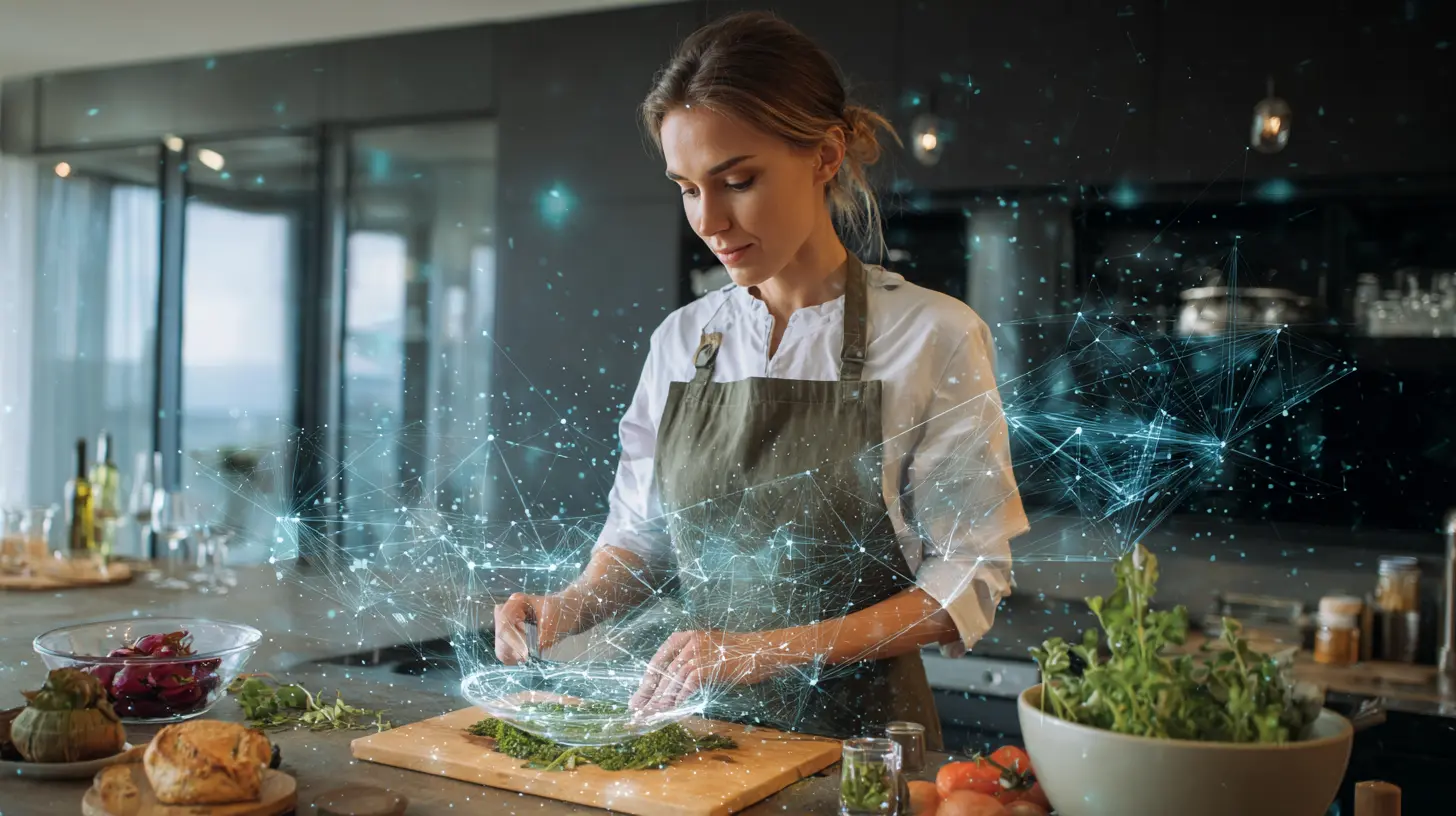
We are living through a quiet revolution. It's not happening on battlefields or in boardrooms. It's happening on our countertops, inside our ovens, and through the screens of our phones. Artificial intelligence has slipped into the kitchen, and it's not here to replace the chef. It's here to make the rest of us look like one. So, let's pull up a stool, pour a cup of coffee, and talk about how AI is rewriting the rules of home cooking. Because honestly, I need all the help I can get.

The Smart Fridge That Knows You're Out of Milk
Let's start with the most obvious player: the refrigerator. For decades, the fridge was a dumb box that kept things cold. You opened it, saw the sad, wilting lettuce, and closed it again. Today, a smart fridge is more like a pantry manager with a PhD in logistics. It has cameras inside. Every time you close the door, it snaps a picture. Then, AI algorithms analyze what's inside.But here's the real trick. These fridges don't just catalog your food. They learn your habits. If you buy a gallon of milk every Tuesday, the fridge will eventually remind you on Monday night that you're running low. Some models can even create shopping lists automatically. You grab the last egg? The list updates. You finish the ketchup? The list updates. It's like having a personal assistant who actually remembers what you need, unlike my brain, which forgets the one item I went to the store for.
The best part? You can check the contents of your fridge from your phone while you're at the grocery store. No more guessing if you have that half-used jar of pesto. No more buying a third bag of spinach because you forgot about the two already rotting in the crisper drawer. It's a small thing, but it saves time, money, and the guilt of throwing away expired food.

AI Ovens That Actually Cook Dinner
Ovens have been the most stubborn appliance in the kitchen. You set a temperature, you set a timer, and you hope for the best. But heat isn't uniform. Your grandma's oven had hot spots. My oven has a personality. AI changes that.Modern AI-powered ovens use sensors and machine learning to adjust temperature and humidity in real time. You put in a chicken, tell the oven it's a chicken, and the oven figures out the rest. It monitors the internal temperature, the browning of the skin, and the moisture level. If the top is getting too dark, it lowers the top heating element. If the meat is cooking too slowly, it kicks up the heat.
But here's the part that blows my mind. Some ovens have a feature called "Probe Assist" or "Auto Cook." You stick a temperature probe into the meat, and the oven does the rest. It doesn't just cook to a set temperature. It learns the shape and density of the food. A thick roast cooks differently than a thin fillet. The AI knows that. It adjusts cooking time and temperature on the fly.
And it doesn't stop at meat. These ovens can bake bread, roast vegetables, and even dehydrate fruit. You can scan a barcode on a frozen pizza, and the oven downloads the perfect cooking profile from the cloud. No more guessing if the box's instructions are accurate for your specific oven. The AI compensates for altitude, humidity, and even the voltage of your home.

The Recipe App That Knows What You Hate
We've all been there. You find a recipe online that looks amazing. You buy all the ingredients. You spend an hour prepping. And then you take a bite, and it's bland. Or too spicy. Or just weird. The problem isn't the recipe. It's that recipes are written for a generic person. But you are not generic.AI recipe apps are changing that. They use your past ratings, your dietary restrictions, and even your cooking history to suggest recipes you'll actually like. If you always skip the cilantro, the app learns that. If you love garlic, it will suggest recipes with extra cloves. Some apps can even scan your fridge and tell you what to cook with what you have.
Think of it like a music streaming service. You listen to a few songs, and the algorithm builds a playlist for you. Same idea here. You cook a few meals, rate them, and the AI builds a meal plan that fits your taste. It's not a random suggestion. It's a personalized recommendation engine for your stomach.
And it gets smarter over time. If you cook a lot of Italian food, the app might suggest a variation on a classic dish. If you're trying to eat less carbs, it will filter out pasta-heavy recipes. It's like having a chef who knows your palate better than you do.
Grocery Delivery That Predicts Your Cravings
We all know the drill. You're hungry, you open the fridge, and there's nothing to eat. So you order takeout. But what if your grocery delivery service knew you were going to be hungry before you did?AI is moving into the world of predictive grocery delivery. Some services analyze your purchase history, the time of day, and even the weather to predict what you'll want to eat. If it's a rainy Sunday, the algorithm might suggest ingredients for a hearty stew. If you've been ordering a lot of salads, it might suggest a new dressing.
The goal is to reduce the friction of meal planning. Instead of you deciding what to eat, the AI suggests options. You just confirm. It's like having a personal shopper who knows your taste and your schedule. And for people who hate meal planning, this is a game changer.
But there's a creepy side, too. The AI knows when you're stressed because you order more comfort food. It knows when you're trying to be healthy because you buy more vegetables. It's a little too intimate. But if you're okay with that level of data sharing, it can save you a lot of mental energy.
Voice Assistants That Actually Help
Alexa, Siri, and Google Assistant have been in kitchens for years, but they've been mostly useless for cooking. "Alexa, set a timer for 10 minutes." That's about it. But the new generation of voice assistants is different. They are integrated with cooking apps and smart appliances.You can now say, "Hey Google, preheat the oven to 375 degrees," and it happens. You can ask, "Alexa, how much flour do I need for this recipe?" and it reads the ingredient list. You can even say, "Siri, show me the recipe for chocolate chip cookies on my phone," and it pulls it up.
The key is context. The AI understands that you are in the kitchen, that your hands are covered in dough, and that you need information without touching a screen. It's not perfect yet. Sometimes it mishears you. But when it works, it feels like magic.
And the best part? You can set multiple timers by voice. "Alexa, set a timer for the chicken for 25 minutes. Set another timer for the rice for 15 minutes." It remembers both. It's a small thing, but it keeps me from burning dinner while I'm chopping onions.
AI That Reduces Food Waste
Let's talk about the elephant in the kitchen: food waste. In the US alone, we throw away about 30-40% of our food. That's not just bad for your wallet. It's terrible for the planet. AI is stepping in to help.Smart storage containers now have sensors that detect when food is going bad. They send a notification to your phone. "Your strawberries will be past their prime in two days. Use them now." Some apps can even suggest recipes based on the ingredients that are about to expire.
Think about it. You have half a bell pepper, some leftover chicken, and a sad tomato. The AI suggests a stir-fry. You use everything up. No waste. It's like having a little guardian angel for your leftovers.
And then there are apps that track your pantry. You scan the barcode when you buy something, and the app knows when it expires. It sends you reminders. "Your milk expires in three days. Make a quiche." It's simple, but it works.
The Future of Kitchen AI
So where is this all going? I think we are just scratching the surface. Imagine an oven that can learn your favorite level of doneness for a steak. You cook it once, you rate it, and the next time, it nails it. Imagine a fridge that automatically reorders your staples when they run low. Imagine a recipe app that uses your health data to suggest meals that fit your blood sugar or cholesterol goals.And then there's the holy grail: a fully autonomous kitchen. You walk in, tell the AI what you want to eat, and it does everything. It chops, it sautes, it plates. It's like having a robot chef. We're not there yet. But the pieces are falling into place.
The technology is getting cheaper. Sensors are getting smaller. AI models are getting smarter. In five years, a smart oven might cost the same as a regular oven. In ten years, it might be weird to have a kitchen that doesn't have some level of AI.
But Is It Worth It?
Here's the honest truth. AI in the kitchen is amazing, but it's not magic. You still have to learn how to cook. You still have to understand flavor profiles. You still have to know when a sauce is too salty or a steak is overdone. The AI can't taste for you. It can only follow data.But what it can do is remove the guesswork. It can handle the boring parts. It can remind you of things you forgot. It can save you from burning dinner. And for someone like me, who loves good food but hates the tedious parts of cooking, it's a godsend.
So, should you buy a smart fridge and an AI oven? Not necessarily. Start small. Get a smart thermometer. Try a recipe app that learns your preferences. Use a voice assistant for timers. See how it feels. Because the goal isn't to replace the joy of cooking. It's to make cooking less stressful and more fun.
After all, I still burned toast last week. But now, my smart toaster alerted me before the smoke alarm went off. Progress.
all images in this post were generated using AI tools
Category:
Ai In Daily LifeAuthor:

Marcus Gray
Discussion
rate this article
1 comments
Blaine McLanahan
AI in the kitchen is not just about convenience; it redefines our relationship with food, pushing us to rethink traditions and embrace innovation while fostering creativity in everyday cooking.
June 11, 2026 at 2:30 AM
Marcus Gray
I completely agree. AI is transforming the way we approach cooking, blending tradition with modern innovation and inspiring creativity in the process. It's an exciting time in the kitchen!