Zero-Shot Learning in NLP and Its Promising Future
19 June 2026
You know that feeling when you meet someone new, and within five minutes, you can guess their favorite coffee order, their political leanings, and whether they'd laugh at a dad joke? Humans are masters of pattern recognition with almost zero data. We meet a new person, and our brain instantly pulls from a lifetime of social cues, body language, and vocal tones to make an educated guess. We don't need a thousand examples of that specific person being sad to know they might be sad when they frown.
Now, look at how most AI works. It's like that overly studious friend who needs to read the entire textbook before answering a single question. You want a model to recognize a "cat"? You show it ten thousand cats. You want it to spot a "sneaky cat"? You need a whole new dataset of sneaky cats. This is the old way. It's expensive, slow, and frankly, boring. It's like teaching a child to identify a ball by only showing them red ones, then expecting them to know a blue one is also a ball.
This is where Zero-Shot Learning (ZSL) walks into the room, steals the spotlight, and makes everything feel a little bit magical. In the world of Natural Language Processing (NLP), ZSL is the closest thing we have to that human instinct. It's the ability for a model to handle tasks it was never explicitly trained on. It doesn't need the textbook. It just needs the concept.
Let's pull back the curtain on this fascinating corner of machine learning. What is it, how does it work its dark magic, and why is it the single most promising thing for the future of how machines understand us?
It's Not Magic. It's Transfer Learning on Steroids.
First, let's kill the mystique. Zero-shot learning sounds like a parlor trick. "Look, I trained this model on movie reviews, and now it can translate French poetry!" But it's not a trick. It's a clever hack of how information is structured.Think of a standard supervised model as a librarian who has only ever seen books in the "Fiction" section. If you hand them a cookbook, they're lost. They have no label for it. A zero-shot model, however, is a librarian who has read a massive encyclopedia of everything. They know what a "book" is, what "cooking" is, and what "instructions" are. When you hand them a cookbook, they don't need a label. They look at the text, compare it to their vast knowledge of concepts, and say, "This looks like a book about cooking instructions... I'll put it in the 'Non-Fiction' section near the kitchen."
The core mechanism is transfer learning on a massive scale. These models are pre-trained on an absurd amount of text data from the internet. They don't just learn words; they learn the relationships between words. They learn that "king" is to "man" as "queen" is to "woman." They learn that "buy" and "sell" are opposites. They build a giant, multi-dimensional map of language.
When you give a zero-shot model a new task, like "classify this sentence as either 'urgent' or 'not urgent'," it doesn't panic. It looks at the words "urgent" and "not urgent," maps them onto its internal knowledge, and then checks the new sentence. It uses that relationship map to decide which side of the fence the sentence falls on, even if it never saw a single example of an "urgent" email during training. It's using analogy, not memory.
The Secret Sauce: Semantic Embeddings
To really get it, you have to understand the "secret sauce." It's all about semantic embeddings. Imagine every word or concept in the universe is a point on a giant, invisible map. "Dog" is close to "cat" and "pet." "Car" is close to "highway" and "gasoline." "Happiness" is close to "joy" but far from "sadness."A zero-shot model doesn't just see the text "Classify this as a complaint." It sees the vector for "complaint." It knows that "complaint" is near words like "angry," "broken," and "refund." It knows it is far from "praise" and "satisfaction."
So, when you feed it a new sentence like, "This product is a piece of junk," the model doesn't look for the word "complaint." It converts the whole sentence into a vector, or a point on that map. Then, it measures the distance between that point and the point for "complaint." If they are close neighbors, boom. It's a complaint. It doesn't need to see the word "complaint" in a training example. It just needs to understand the neighborhood of the concept.
This is why ZSL is so powerful for NLP. Language is fluid. New slang appears every day. Nuance is everything. A strict, trained model can't handle the sentence "This is lit" if it was only trained on formal reviews. But a zero-shot model? It knows "lit" is close to "excellent." It gets it.
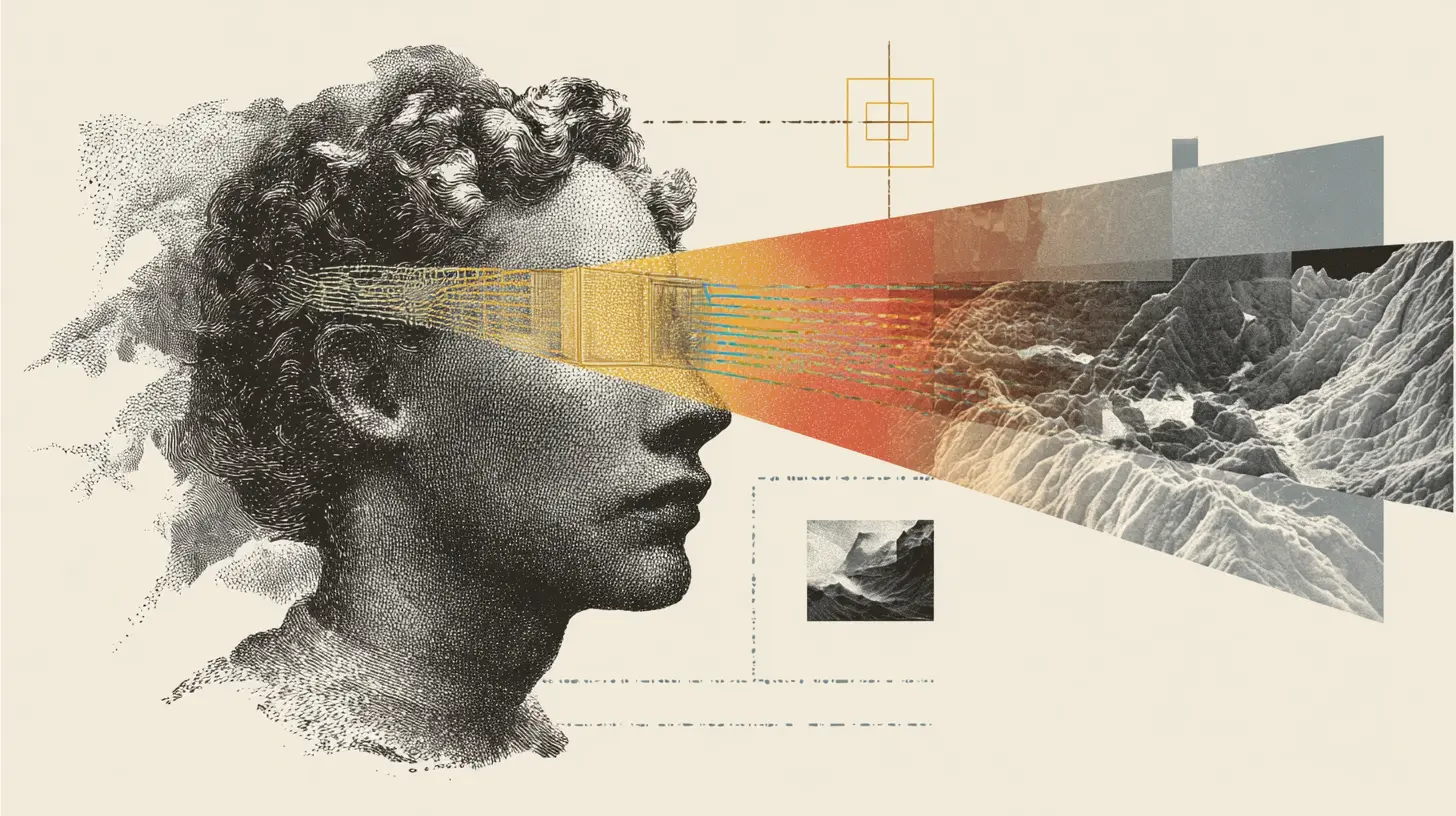
Why This Changes Everything for the Tech World
Let's stop talking about the math and start talking about the real-world impact. Why should you care? Because ZSL is about to make your software a lot smarter, and a lot less annoying.1. The End of the "Labeling Hell"
Right now, building a custom NLP model is a nightmare. You need a team of annotators to hand-label thousands of examples. It's expensive, time-consuming, and often boring for the humans doing it. ZSL blows this up. You want a model to detect "sarcastic customer feedback"? You don't need to label ten thousand sarcastic tweets. You just describe the task in plain English to a zero-shot model: "Classify this text as 'sarcastic' or 'not sarcastic'." It will likely do a decent job right out of the box. It might not be perfect, but it's a massive head start, and it's free.
2. The Rise of the "Universal Assistant"
Have you ever wished Siri or Alexa could just understand you without you having to use specific trigger phrases? ZSL is the key. Instead of training a model on a specific list of commands ("Turn on the lights," "Play music"), a zero-shot assistant could handle novel requests. You could say, "I'm feeling a bit gloomy, can you make the room more cheerful?" It doesn't have a script for "gloomy" or "cheerful." But it understands the semantic link between "gloomy" and "dim" and "cheerful" and "bright." It turns up the lights and plays some upbeat music. That's the promise.
3. Breaking Down Language Barriers (For Real)
Translation is hard. Idioms, cultural references, and slang are the bane of traditional translation models. A model trained on formal news articles will butcher a casual conversation. Zero-shot models, because they understand concepts rather than literal translations, handle this better. They can see the intent behind the words. A zero-shot translation model might not know the exact equivalent of "It's raining cats and dogs," but it knows the concept of "heavy rain" and can find a natural equivalent in the target language.

The Cracks in the Facade: Where ZSL Still Stumbles
Okay, I've sold you on the dream. But let's be real. It's not perfect. If it were, we'd all be using it for everything by now. There are some serious limitations.The "Stereotype" Trap.
Because these models learn from the internet, they learn all of our biases. If a zero-shot model is asked to classify a text about a nurse, it might associate it with "female" because the internet does that. If you ask it to classify a text about a CEO, it might lean "male." This is a massive problem. ZSL doesn't magically solve bias; it inherits it. We have to be incredibly careful about how we deploy these systems, especially in sensitive areas like hiring or loan applications.
The "Black Swan" Problem.
A zero-shot model is only as good as its training data. If you ask it to classify a text about a brand-new concept that doesn't exist in its pre-training data, it will fail. It can't guess what a "quantum-flux capacitor" is if it never read a sci-fi novel. It's great at analogies, but it can't invent new concepts out of thin air.
The "Confidence" Con.
A zero-shot model will always give you an answer. It will never say "I don't know." It will classify a random string of characters as something, even if it's nonsense. This false confidence is dangerous. If you're using it for a medical diagnosis assistant, you need to be aware that it might be guessing with high confidence and be completely wrong. Hallucination is a real enemy here.
The Future: Few-Shot, Meta-Learning, and the Holy Grail
So, what's next? Zero-shot is not the final destination. It's a stepping stone. The real holy grail is General Intelligence, but we're not there yet. Here is where the field is heading.Few-Shot Learning: This is the natural evolution. Why settle for zero examples when you can have one or two? Few-shot learning is like giving the model a tiny cheat sheet. You say, "Here are two examples of a 'polite refusal'. Now, find more." This dramatically improves accuracy over pure zero-shot. Most modern large language models (like GPT-4 or Claude) are actually few-shot masters. They can learn a new task from a single prompt.
Meta-Learning: This is the "learning to learn" approach. Instead of training a model to do one specific task, you train it to be good at learning new tasks. Think of it as a student who doesn't just memorize history dates, but learns the best method for memorizing dates. Meta-learning models are incredibly efficient. They can adapt to a new NLP task with just a handful of examples, because they've been trained on thousands of different tasks.
The "Why" Question:
The ultimate frontier is moving from pattern recognition to understanding. Right now, ZSL is a pattern-matching machine. It sees that "lit" is close to "excellent" in the vector space, but it doesn't know why. It doesn't understand the social context of slang. The future is about building models that can not only classify a text but also explain why they classified it that way. "I classified this as a complaint because the words 'broken' and 'refund' are semantically close to the concept of 'dissatisfaction'." That level of explainability is the next big leap.
A Final Thought: The Machine is Learning to Imagine
Zero-shot learning is more than a technical trend. It's a philosophical shift. It represents the moment when machines stopped being pure parrots and started becoming analogists. They are no longer just regurgitating patterns they've seen. They are combining concepts in novel ways to handle the unknown.It's messy, it's biased, and it's often wrong. But so are we, at first. The promise of ZSL isn't perfection. It's flexibility. It's the ability to handle the chaos of real human language without needing a pre-written script for every single scenario. It's the ghost in the machine that can guess your coffee order, even if you've never told it.
And that, my friends, is a future worth writing about.
all images in this post were generated using AI tools
Category:
Natural Language ProcessingAuthor:
Marcus Gray
Discussion
rate this article
1 comments
Dakota Nguyen
Zero-shot learning in NLP is a game changer, enabling models to tackle tasks without extensive training data. Its potential to enhance adaptability and efficiency in various applications makes it an exciting area to watch as technology continues to evolve.
July 2, 2026 at 4:35 AM
Marcus Gray
I completely agree. Zero-shot learning is truly transformative, opening doors for more versatile NLP models. The future is definitely bright in this space.