Your Next Doctor Might Be an AI
1 August 2026
You sit in the exam room, the paper crinkling under you, and you run through the list of symptoms you have been meaning to mention for weeks. The doctor walks in, glances at the tablet, asks a few questions, and types something. In ten minutes, you are out the door with a prescription and a referral. Most of that appointment was not medicine. It was data triage, pattern matching, and documentation. And those are exactly the tasks that artificial intelligence has become frighteningly good at.
We are not at the point where a robot in a white coat will walk into your room and check your reflexes. But the odds are high that the next time you interact with the healthcare system, an AI will have already read your chart, flagged your lab results, or suggested a diagnosis to a human clinician before you even open your mouth. That is a bigger shift than most people realize, and it deserves a closer look than the usual hype or fear allows.
What AI in Medicine Actually Looks Like Right Now
Let me be clear about one thing: AI in healthcare is not one thing. It is a collection of tools that do very specific jobs, and the jobs are far less dramatic than the headlines suggest. Right now, the most mature applications fall into a few buckets.The first is image analysis. Radiology and pathology have been the proving grounds for AI because images are data, and data is what AI eats. Algorithms can now detect subtle patterns in chest X-rays, CT scans, and mammograms that human eyes might miss, especially early signs of lung nodules or breast calcifications. These systems are not replacing radiologists. They are acting as a second set of eyes, flagging suspicious areas for a human to review. The best results come when the AI and the radiologist work together, with the AI handling the boring, repetitive task of scanning hundreds of images for obvious anomalies while the human focuses on the complex cases.
The second bucket is clinical decision support. This is where AI reviews a patient's electronic health record, including past diagnoses, medications, lab values, and even free-text notes, and then suggests possible diagnoses or alerts the clinician to risks. For example, an AI might notice that a patient on a certain blood thinner has a rising creatinine level and warn the doctor about potential kidney strain before the next appointment. It might flag a drug interaction that would take a human several minutes of manual checking to catch.
The third bucket is patient-facing chatbots and symptom checkers. These are the tools you might interact with directly, often through a website or an app. You type in your symptoms, answer a few clarifying questions, and the system gives you a list of possible conditions and a recommendation for next steps, like seeing a primary care doctor or going to urgent care. These are the most visible to the public, and also the most variable in quality.
The Promise That Is Real
I have spent time working with clinicians who use these tools daily, and the honest assessment is that AI is already saving time and catching things that would otherwise slip through the cracks. Consider the mundane but critical task of reviewing a patient's medication list. A busy doctor might see thirty patients a day, each with multiple prescriptions, and the chance of missing a potential interaction is real. AI does not get tired. It does not get rushed. It reads every single line every single time.There is also the question of diagnostic accuracy in fields like dermatology. A general practitioner might see a suspicious mole once a month and has limited experience with the full spectrum of skin lesions. An AI trained on hundreds of thousands of images of melanoma, basal cell carcinoma, and benign nevi can provide an instant risk score. That does not mean the AI is always right, but it raises the floor of competence for every doctor, not just the ones with extra training.
The bigger promise, though, is in preventive care. AI can analyze population-level data to identify patients who are at high risk for conditions like diabetes, heart disease, or sepsis before they become acute. In hospital settings, AI models that monitor vital signs in real time can predict deterioration hours before a patient would show obvious symptoms. That is the kind of early warning that saves lives, and it is happening now.
The Hard Truth About Accuracy and Bias
Now we get to the uncomfortable part. AI is not neutral. It learns from data, and the data we feed it is messy, incomplete, and full of human bias. If you train an AI on images of skin lesions that come mostly from lighter-skinned patients, it will be less accurate on darker skin. If you train it on electronic health records that underdiagnose women for heart disease because women historically presented with different symptoms that were missed, the AI will inherit that blind spot.This is not a hypothetical problem. It is a structural one. The best AI systems in the world are only as good as the data they are trained on, and healthcare data is notoriously fragmented. Different hospitals use different coding systems. Some patients have sparse records because they have changed insurance often. Others have rich records because they have been in the same system for decades. The AI can easily learn to make decisions based on these artifacts rather than on actual clinical truth.
A common misconception is that AI will eliminate diagnostic errors entirely. It will not. It will shift the types of errors. A human might miss a rare disease because they have never seen it before. An AI might miss it because it was underrepresented in the training data. Both are failures, but they are different failures, and we need to design systems that account for both.
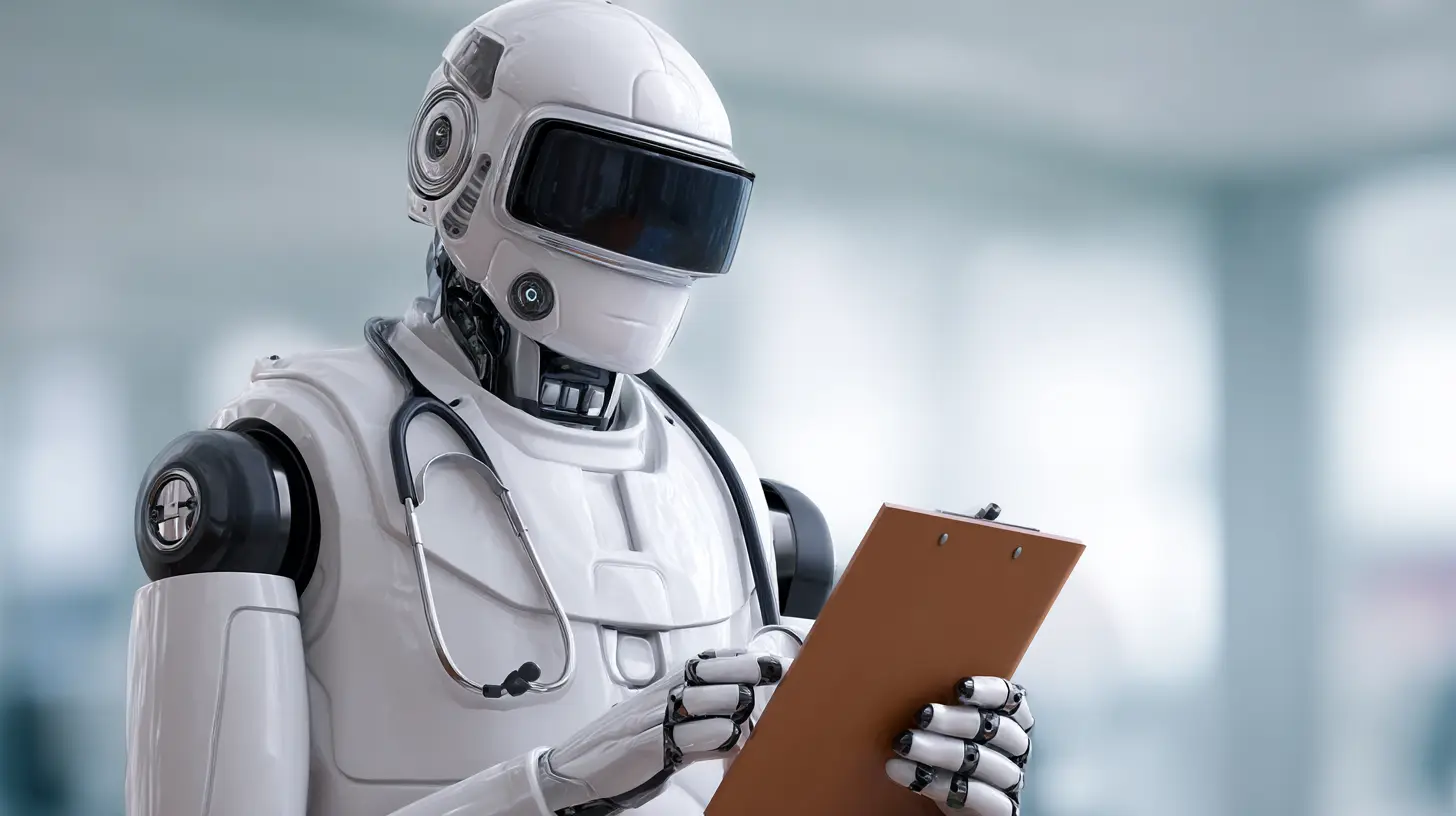
The Human-Machine Partnership Is the Only Model That Works
The most successful deployments of AI in medicine are not autonomous. They are collaborative. Think of it like a pilot and an autopilot. The autopilot handles the steady cruising, adjusts for wind, and maintains altitude. But the pilot is there for takeoff, landing, turbulence, and any situation that the autopilot was not programmed for. Medicine is full of turbulence.There are several reasons why full autonomy is a bad idea in healthcare. The first is accountability. When a diagnosis is wrong, someone has to answer for it. Patients want to know that a human being reviewed their case and made the final call. That is not just a legal requirement; it is a psychological one. The trust between a patient and a doctor is built on the understanding that the doctor cares, and AI cannot care.
The second reason is context. A lab value that is normal for one patient might be abnormal for another. An AI might flag a slightly elevated white blood cell count as a sign of infection, but if the patient is a marathon runner who just finished a race, that elevation might be benign. A good clinician brings context that the AI does not have, like the fact that the patient is a marathon runner, or that they have been stressed, or that they are not sleeping well.
The third reason is communication. A diagnosis is only useful if the patient understands it and is willing to act on it. AI can tell you that you have a high probability of developing type 2 diabetes, but it cannot sit with you and explain that the changes you need to make are hard, that you will not be perfect, and that you should not give up if you slip. That is the work of a human.
What You Should Actually Do as a Patient
If you are reading this and wondering how to prepare for the AI-driven future of medicine, the answer is not to be afraid, and it is also not to blindly trust every algorithm that comes your way. The practical approach is to be an active participant in your own care.First, ask your doctor about the tools they use. If they mention that an AI helped flag something on your scan, ask what it found and what it did not find. You are entitled to understand the reasoning behind your care. A good doctor will walk you through it.
Second, do not rely on symptom checkers as a substitute for a real evaluation. They are useful for triage, for figuring out whether you need to be seen urgently or whether you can wait a few days. They are not useful for final diagnoses. If a symptom checker tells you that your headache is likely a tension headache, but you have also been having vision changes, you should still see a doctor. The AI does not know your history, your family background, or the fact that your headaches have been getting progressively worse for three months.
Third, keep your own health records organized. The more complete your data is, the better any AI system can work for you. If you have been to multiple specialists, ask for copies of your reports. Keep a list of your medications, including over-the-counter supplements. This does not just help the AI; it helps the human doctor who is using the AI.
The Economics of AI in Medicine
Money is the force that will determine how fast AI gets adopted, and it is worth understanding the incentives. Hospitals and clinics are not adopting AI because it is cool. They are adopting it because it can reduce costs and increase throughput. An AI that reads a chest X-ray in seconds can reduce the backlog of images that pile up overnight. An AI that helps with documentation can save a doctor two hours a day, which means the doctor can see more patients.This is a double-edged sword. On one hand, efficiency gains could make healthcare more accessible, especially in underserved areas where there are not enough radiologists or specialists. On the other hand, there is a risk that AI becomes a way to squeeze more work out of already overburdened clinicians, leading to burnout. The technology is not the problem; the way it is deployed is.
A good rule of thumb is to look for systems that make the doctor's job easier without making it more stressful. If a doctor is spending less time on typing and more time on talking to you, that is a win. If a doctor is spending more time clicking through AI-generated alerts and ignoring you, that is a loss.
Common Mistakes and Misconceptions
Let me debunk a few things that are repeated so often they have become accepted wisdom.Misconception one: AI is about to replace your doctor. No. AI is about to change what your doctor does, but the doctor is not going away. The shortage of physicians is so severe, especially in primary care, that AI is actually a way to keep the doctors we have from burning out.
Misconception two: AI is objective. No. AI is a mirror of the data it was trained on. If the data contains bias, the AI contains bias. The best systems are constantly audited and updated, but that is expensive and not always done well.
Misconception three: AI is infallible. No. AI makes mistakes, and sometimes they are weird mistakes that a human would never make. An AI might confuse a benign skin lesion with a malignant one because of an artifact in the image, like a hair follicle or a shadow. That is why human review is essential.
Misconception four: AI will make healthcare more impersonal. This one is interesting because the opposite can be true. If AI handles the routine data entry and the repetitive checks, the doctor has more mental energy for the human interaction. The problem is that many current AI deployments are designed to save money, not to improve the patient experience, and that leads to impersonal care.
The Road Ahead
We are in the early innings of a long game. The next five years will bring more integration, more regulation, and more public awareness. We will see AI used in mental health triage, in chronic disease management, and in personalized treatment plans based on genetic data. We will also see failures, lawsuits, and public backlash when an algorithm makes a bad call.The key is to approach this with open eyes. AI is a tool, and like any tool, it can be used well or poorly. A hammer can build a house or break a window. The difference is not in the hammer; it is in the person swinging it. In healthcare, the person swinging it is the clinician, and the patient is the one standing nearby.
You should not be passive in this process. You should ask questions, seek second opinions, and remember that the AI is not your doctor. It is a helper to your doctor. The relationship that matters is still between you and the human being who has taken an oath to do no harm.
The next time you sit in that exam room, and the doctor seems to be reading something on the screen that you did not say, there is a good chance an AI is doing some of the thinking. That can be a good thing, if it means nothing is missed. It can be a bad thing, if it means you are not being listened to. The technology is not going away. The question is whether we use it to make medicine more human, not less.
The best way to ensure that is to stay informed, stay involved, and hold the system to a high standard. Your next doctor might be an AI, but the one who holds your hand and tells you the truth will still be a person.
all images in this post were generated using AI tools
Category:
Ai In Daily LifeAuthor:

Marcus Gray