The Impact of Generative AI on Team-Based Workflows
29 July 2026
Let's cut through the noise. Generative AI is not coming for your job. It is coming for your workflow. And if you are leading a team, it is already reshaping how your people collaborate, communicate, and create. The question is not whether to adopt it, but how to integrate it without destroying the trust, creativity, and accountability that make teams actually work.
I have spent the last two years consulting with engineering teams, marketing departments, and product groups that rushed headlong into generative AI tools. Some emerged stronger. Others imploded under the weight of half-baked outputs and eroded ownership. The difference was not the tool. It was the workflow design.
This article is a field guide. It covers what generative AI does to team dynamics, where it helps, where it hurts, and how to build workflows that amplify human judgment rather than bypass it.
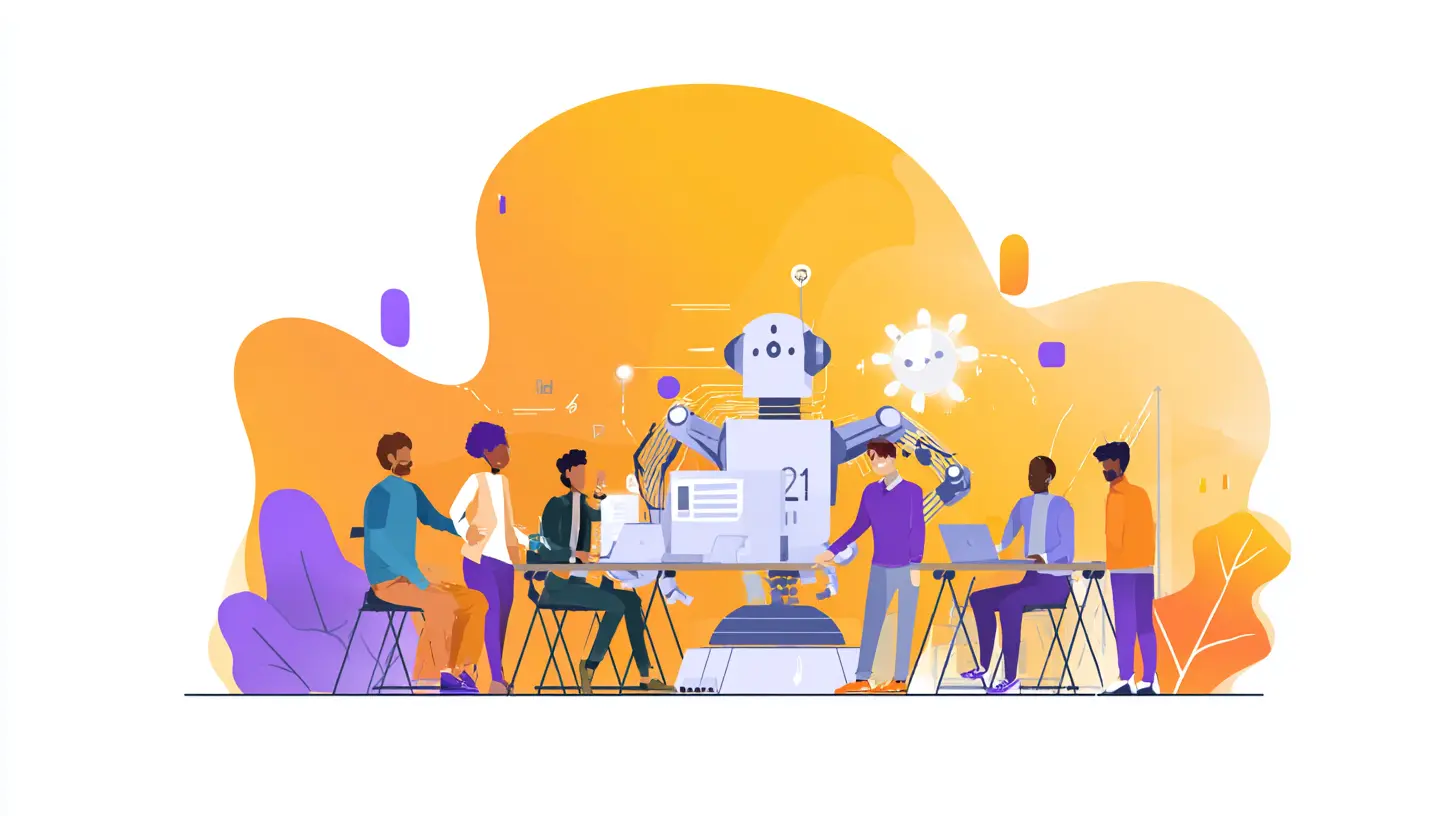
The Fundamental Shift: From Individual Production to Collaborative Curation
Before generative AI, a typical team workflow looked like this: a person generates an idea, drafts content or code, iterates based on feedback, and then delivers a final version. The bottleneck was always human bandwidth. One person could only produce so much, and quality suffered when speed was demanded.Generative AI flips this model. Now a single person can generate dozens of drafts, hundreds of lines of code, or multiple design variations in minutes. The bottleneck shifts from production to evaluation. Teams no longer spend most of their time creating. They spend most of their time choosing, refining, and rejecting.
This sounds like a productivity win, and it can be. But it introduces a hidden cost: decision fatigue. When every team member can produce ten mediocre options instead of one good one, the cognitive load of filtering those options grows exponentially. I have seen teams spend more time reviewing AI slop than they ever spent writing original work.
The key insight is that generative AI does not eliminate the need for human judgment. It concentrates it. Teams must redesign their workflows to handle this new bottleneck, or they will drown in output.
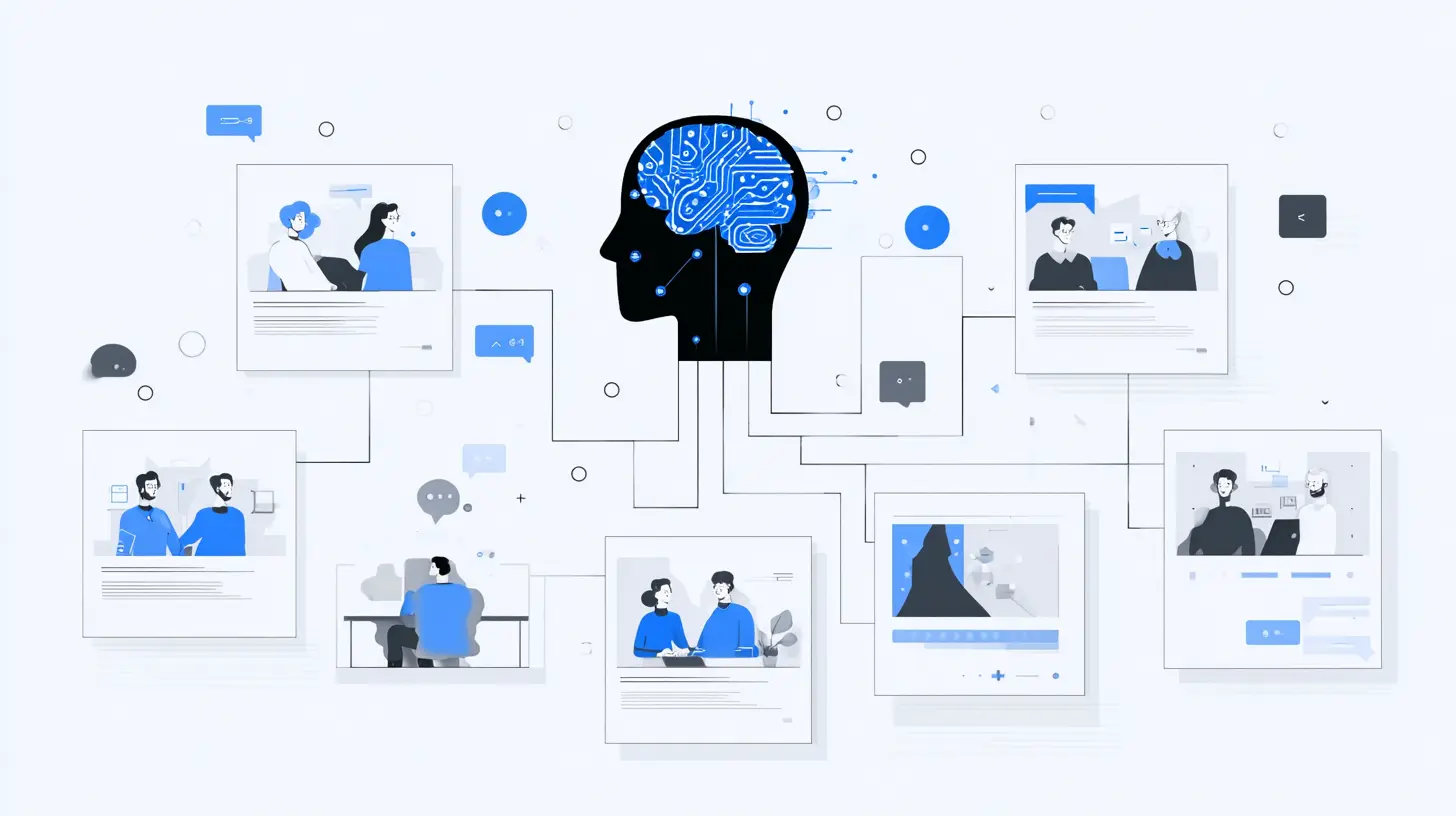
How Generative AI Changes Communication Patterns
One of the most underestimated impacts of generative AI on teams is how it alters communication. Consider a typical brainstorming session. In the past, a team would gather, throw around rough ideas, and build on each other's thoughts. The messiness of that process was valuable. It forced people to articulate half-formed concepts, which led to unexpected connections.Generative AI tools now allow individuals to come to meetings with fully formed proposals. A product manager can ask ChatGPT to draft a feature spec before the meeting. A designer can generate five UI mockups with Midjourney before anyone has discussed requirements. This sounds efficient, but it often kills collaboration.
When one person arrives with a polished artifact, the rest of the team shifts from co-creators to critics. Instead of building together, they tear apart something that took significant effort to produce. This creates resentment and reduces psychological safety. Team members stop sharing rough ideas because they feel they must compete with AI-generated polish.
The fix is to establish norms around when generative AI is used individually versus collaboratively. For early-stage ideation, ban polished outputs. Force people to share raw, unformed thoughts. Save the AI for later stages when the team needs to expand on a direction they have already agreed on.

The Ownership Problem: Who Is Accountable for AI Output?
Here is the question that keeps me up at night: when a team uses generative AI to produce work, who owns the mistakes? This is not a theoretical concern. I have seen a marketing team launch a campaign based on AI-generated copy that included a hallucinated statistic. The client was furious. The team pointed at the tool. The tool had no legal standing. The team was fired.Generative AI creates a diffusion of responsibility. When everyone contributes a little AI-generated content, no one feels fully accountable for the final product. This is especially dangerous in engineering teams where AI-generated code is reviewed but not rewritten. A bug that passes review becomes everyone's problem and no one's fault.
The best teams I have observed address this by enforcing strict attribution rules. One person must be named as the "responsible editor" for any AI-generated output that enters the workflow. That person is accountable for verifying facts, testing code, and ensuring quality. The AI is treated as a junior contributor whose work must be checked, not a co-author whose errors are shared.
This sounds obvious, but most teams skip it because it slows things down. That is the point. If you want speed without accountability, you get chaos. If you want speed with accountability, you need a human gatekeeper.

Real-World Example: Engineering Teams and Code Generation
Let me give you a concrete example from a software team I worked with. They adopted GitHub Copilot across the entire engineering organization. Within two weeks, pull request volume increased by 40 percent. Code review time tripled. Why? Because reviewers could not trust the AI-generated code. They had to test every edge case manually.The team made a classic mistake: they treated AI-generated code as a draft instead of a suggestion. The engineers would accept Copilot's completions without fully understanding them, then submit for review. Reviewers, knowing the code was AI-generated, became hyper-vigilant. The result was more work, not less.
The fix was counterintuitive. They restricted Copilot to specific tasks: writing unit tests, generating boilerplate, and creating documentation. For core logic, engineers had to write code manually. This reduced the volume of AI-generated code but dramatically improved trust. Reviewers knew that any AI-generated code was limited to low-risk areas, so they could review it quickly.
The lesson is that generative AI works best when its scope is narrow and its output is easily verifiable. Broad, unrestricted use creates distrust and overhead.
The Creativity Paradox: More Options, Less Innovation
There is a common belief that generative AI will unlock creativity by giving teams more ideas to work with. In practice, it often does the opposite. When a team can generate 50 taglines in 30 seconds, they stop thinking about what makes a tagline good. They start picking the least bad option from a list.This is the creativity paradox. Abundant options reduce the incentive to think deeply about constraints. Real creativity comes from working within limitations. Generative AI removes those limitations, which sounds liberating but often leads to generic, soulless output.
I have seen this play out in design teams. A team that used to spend a week iterating on a logo now generates 100 options in an afternoon. They pick one, but they cannot explain why it works. The logo is technically competent but lacks the conceptual depth that comes from a constrained creative process.
The solution is to use generative AI as a divergent thinking tool, not a convergent one. Use it to explore the edges of possibility, then step away from the tool and apply human judgment to narrow the field. Do not let the AI do the narrowing. That is where the value of human creativity lives.
Trade-offs: Speed vs. Quality vs. Team Cohesion
Every team that adopts generative AI faces a three-way trade-off: speed, quality, and team cohesion. You can optimize for any two, but not all three.If you optimize for speed and quality, you will sacrifice team cohesion. This happens when a few power users dominate the AI tools and produce work faster than the rest of the team can keep up. Resentment builds. The team splits into AI haves and have-nots.
If you optimize for speed and cohesion, you will sacrifice quality. This happens when the whole team uses AI equally but without rigorous review. Output volume goes up, but errors and mediocrity multiply.
If you optimize for quality and cohesion, you will sacrifice speed. This is the most sustainable path. It means setting strict quality standards for AI output, training the whole team together, and accepting that the initial productivity gains will be modest.
Most teams try to get all three and fail. The smart ones pick two and accept the trade-off.
Common Mistakes and Misconceptions
Let me address the most dangerous misconceptions I see in the field.Mistake 1: Treating AI as a replacement for junior team members. This is a disaster. Junior team members learn by doing. If you replace their work with AI output, you rob them of the practice they need to become senior. Worse, you create a knowledge gap where no one understands the fundamentals because the AI handled everything.
Mistake 2: Assuming AI output is neutral. Generative AI models are trained on biased data. They reflect the biases of their training sets. If your team uses AI to generate hiring descriptions, marketing copy, or product features, you will inherit those biases. You need a human review process specifically looking for bias, not just quality.
Mistake 3: Ignoring the collaboration overhead. Every AI tool adds a coordination cost. Someone has to prompt it, review its output, and integrate it into the team's work. This cost is invisible at first because the output appears so quickly. Over time, it adds up. Teams that do not account for this overhead find themselves working harder, not smarter.
Mistake 4: Using AI for tasks that build shared understanding. Some tasks are valuable precisely because they force the team to align. Writing a project brief together, for example, is not just about producing a document. It is about getting everyone on the same page. If AI generates the brief, the team loses that alignment process. The document looks good, but the team is fragmented.
Best Practices for Integrating Generative AI into Team Workflows
Based on what I have seen work across dozens of teams, here are the practices that consistently deliver results.Define the boundary between AI and human work. Be explicit about what tasks are AI-assisted and what tasks are human-only. Write this down. Share it with the team. Revisit it quarterly as tools evolve. The boundary will shift, but having one is better than having none.
Create a review protocol. Every piece of AI-generated output that enters the team's workflow must pass through a human review. The reviewer should have a checklist: accuracy, bias, tone, consistency with team standards. Do not skip this step. It is not optional.
Train the team on prompting as a skill. Prompting is not typing a question into a box. It is a craft. Teach your team how to write specific, contextual prompts. Show them how to iterate on prompts to get better results. This investment pays off in quality and reduces the time spent reviewing bad output.
Use AI to augment, not replace, collaboration. The best use of generative AI in teams is to handle the tedious parts of collaboration: summarizing long discussions, generating meeting notes, drafting follow-up emails. These tasks drain energy without adding value. Let AI handle them so humans can focus on the work that requires judgment.
Measure the right things. Do not track only output volume. Track review time, error rates, and team satisfaction. If AI increases output but destroys team morale, it is not a win. Use qualitative feedback from the team to adjust your approach.
When Not to Use Generative AI in Teams
This is the section most articles skip. Generative AI is not always the answer. Here is when you should avoid it.When the stakes are high and the cost of error is catastrophic. Medical diagnosis, legal advice, financial compliance. These domains require human expertise and accountability. AI can assist with research, but the final decision must be human.
When the team needs to build shared context. Early in a project, before the team has aligned on goals, AI-generated output can short-circuit the alignment process. Let the team struggle through the messy phase of building shared understanding. It is painful, but it is necessary.
When the work is deeply creative and original. If you are trying to break new ground, AI will pull you toward the average of its training data. That is the opposite of what you want. Use AI for inspiration, but do not let it define the direction.
When the team is already overwhelmed. Adding a new tool to an overworked team is cruel. It adds cognitive load, requires training, and creates new processes. Wait until the team has bandwidth to adopt the tool thoughtfully.
The Future of Team-Based Workflows with Generative AI
I believe we are in the early stages of a fundamental restructuring of how teams work. The teams that succeed will not be the ones that use AI the most. They will be the ones that use AI the most intentionally.The future workflow will look like this: humans set the direction, define the constraints, and make the final decisions. AI handles the execution, the variation generation, and the routine tasks. But the human role shifts from producer to curator, from creator to editor.
This requires a different set of skills. Teams will need to hire for critical thinking, pattern recognition, and judgment, not just technical execution. The ability to evaluate AI output will become as important as the ability to produce original work.
The teams that adapt will be faster, more creative, and more resilient. The teams that resist will struggle. But the teams that adopt without thinking will fail the hardest.
Final Recommendations
If you take nothing else from this article, take these three actions.First, audit your current workflows. Identify where generative AI could reduce friction and where it would add overhead. Be honest about the trade-offs.
Second, establish clear ownership and review processes before you deploy any AI tool. Do not let the tool define the process. Define the process, then fit the tool into it.
Third, involve the whole team in the decision. Generative AI changes how people work. If you impose it from the top, you will get resistance. If you co-design the integration with the team, you will get adoption.
Generative AI is a powerful tool. But it is still a tool. The team is the system. Design the system first, then add the tool. That is the only way to get the impact you want without breaking what you already have.
all images in this post were generated using AI tools
Category:
Collaborative SoftwareAuthor:

Marcus Gray
Discussion
rate this article
1 comments
Juliana Soto
Sure, generative AI is great for team workflows, but can it brew coffee and remind us of deadlines without making awkward jokes? If it can navigate office politics as well as it generates memes, we might finally have a true office buddy... just don't ask it to take lunch orders!
July 30, 2026 at 3:15 AM