The Rise of Multilingual NLP and What It Means for Global AI
7 June 2026
You know that feeling when you pop open Google Translate, paste a block of text, and get something that mostly makes sense? It is a small miracle, honestly. But what if I told you that behind that simple act lies one of the most dramatic shifts in the history of computing? We are not just talking about better translation anymore. We are talking about machines that genuinely understand the rhythm of human language across hundreds of different tongues. This is the rise of multilingual Natural Language Processing, or what the nerds call multilingual NLP. And it is quietly reshaping the future of global AI in ways that most people haven't even noticed yet.
For the longest time, AI was a bit like that friend who only speaks English and a little bit of Spanish. It worked great if you stayed in its comfort zone, but the moment you threw in something like Swahili, Bengali, or Quechua, the system just hit a wall. Most early NLP models were trained exclusively on English data. Why? Because English had the largest datasets, the most research funding, and the biggest tech companies behind it. The rest of the world's languages were treated as an afterthought. That is changing, and it is changing fast.
Think of it this way. Imagine you are building a library, but you only buy books written in one language. That library is not really a library of human knowledge, right? It is a regional collection. That is what we had for years in AI. Now, we are finally building a library that includes books from Tokyo, Nairobi, Buenos Aires, and Reykjavik. And the librarians are learning to read all of them at the same time.
Why Now? The Perfect Storm for Multilingual AI
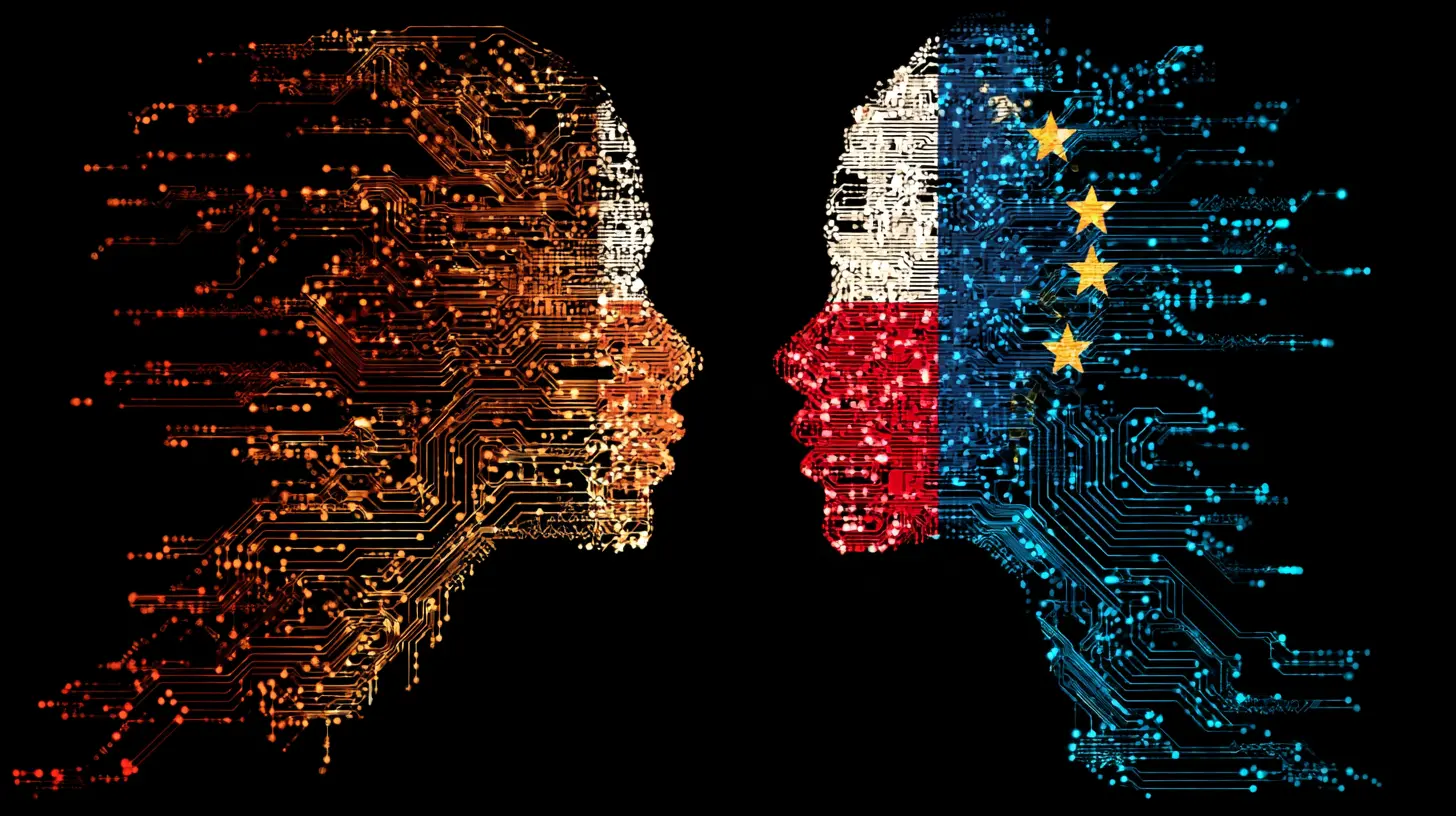
So why is this happening right now? It is not like someone suddenly discovered that other languages exist. The shift is driven by three forces that came together like a perfect storm.First, we have the data explosion. The internet is no longer an English-only club. Something like 60% of online content is now in languages other than English. Social media, blogs, forums, customer reviews, support tickets -- all of this data is sitting there in dozens of languages. Companies realized they were sitting on a goldmine of information they could not use because their AI tools only understood a fraction of it. The data was there, waiting to be unlocked.
Second, we have the hardware leap. Training a model to understand 100 languages at once used to be a nightmare. It required monstrous amounts of compute power that only a handful of organizations could afford. But with the rise of specialized chips like GPUs and TPUs, and the massive scaling of cloud infrastructure, the cost of training these giant multilingual models has dropped significantly. What was once a moonshot is now a realistic project for a well-funded startup.
Third, and most importantly, we have a breakthrough in architecture. The transformer model. You have probably heard of it if you follow AI news. But the key thing is that transformers are incredibly good at learning the relationships between words, regardless of the language they are in. They do not need to be told the grammar rules of Japanese or the syntax of Arabic. They figure it out by looking at patterns in the data. This made it possible to train one giant model on text from 50 different languages and have it learn not just each language individually, but the connections between them. It is like teaching someone French, Spanish, and Italian at the same time and watching them suddenly understand the Latin roots that tie them all together.
How Multilingual NLP Actually Works (The Simple Version)
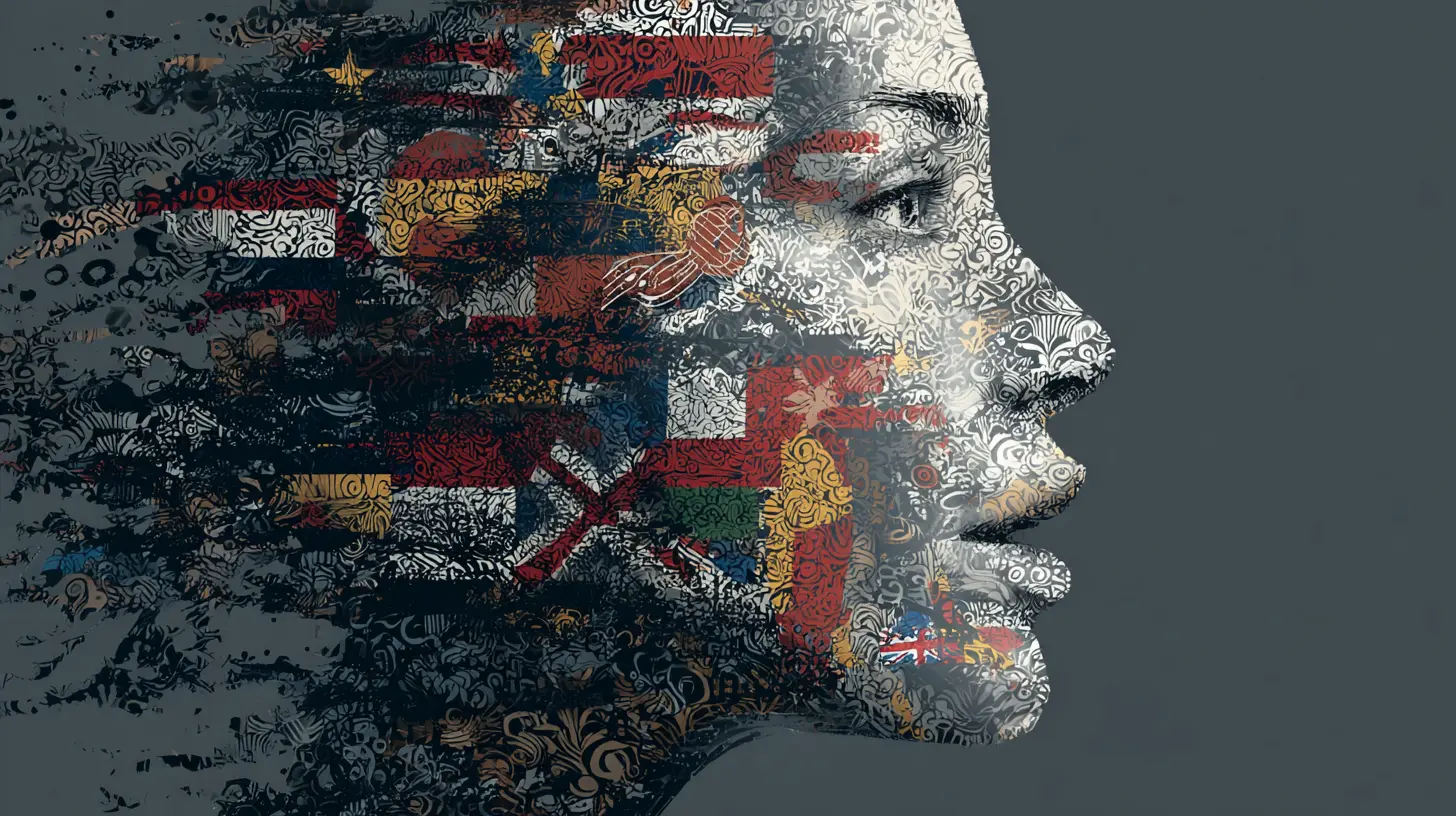
Let me break this down without the jargon. Imagine you have a giant puzzle box with pieces from 100 different puzzles mixed together. A traditional NLP model would try to sort the pieces by puzzle first, then build each one separately. That is slow and wasteful.A modern multilingual model does something different. It looks at all the pieces and starts connecting them by shape and color, regardless of which puzzle they belong to. It learns that the concept of "water" appears in English sentences as "water," in Spanish as "agua," and in Hindi as "pani." It does not just memorize the words. It learns the context around those words. It learns that "water" is something you drink, something that falls from the sky, and something that flows in rivers. It builds a shared mental space for the concept of "water" that all languages can plug into.
This is called a shared embedding space. And it is the secret sauce. Once you have that, you can do some wild things. You can take a sentence in English, map it to that shared space, and then generate the same concept in Swahili. You can ask a question in Mandarin and get an answer that was written in a French document. The model is not translating word for word. It is understanding the meaning and then expressing it in a different language.
This is a huge leap from the old days of rule-based translation, where you had a dictionary and a grammar book glued together. Now, the machine has a kind of intuition about language. It is not perfect, but it is getting scarily close.
What This Actually Means for Global AI
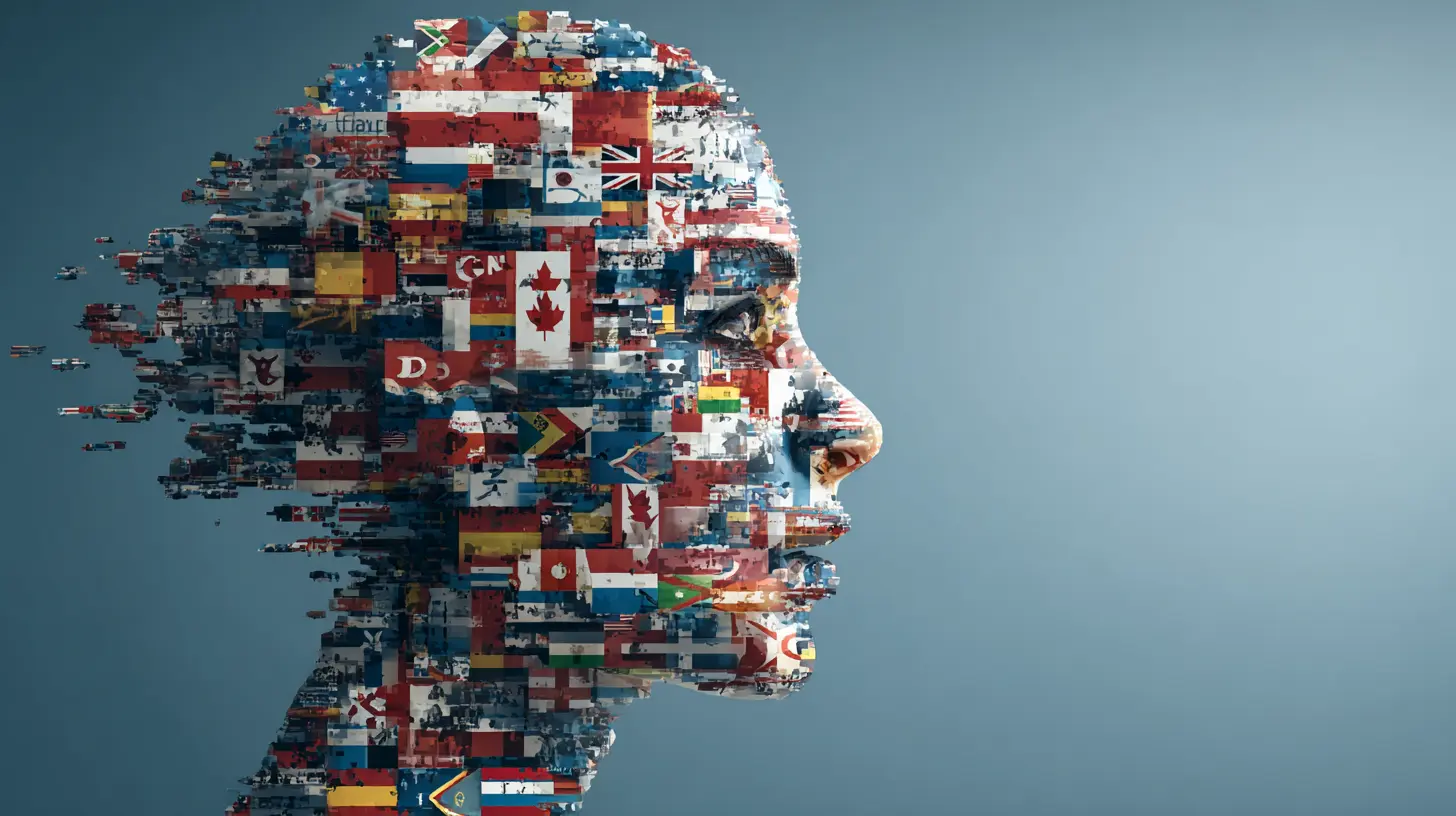
Alright, so the tech is cool. But what does it mean for you and me and the rest of the planet? Let me give you some concrete examples that go beyond just translating your menu at a restaurant.1. Customer Support That Does Not Suck
Have you ever tried to get help from a company that only has an English chatbot? It is frustrating. You type your problem in your native language, and the bot gives you a canned response that makes no sense. Multilingual NLP is killing that experience. Companies like Zendesk and Intercom are already rolling out support bots that can handle conversations in 20 or 30 languages seamlessly. A customer in Brazil can type in Portuguese, the AI understands the intent, looks up the solution in a database written in English, and responds in flawless Portuguese. It is not just translation. It is understanding the tone, the urgency, and the specific cultural context of the complaint. That is a game-changer for any business that operates globally.
2. Breaking Down Information Barriers in Science and Medicine
This is where it gets really important. The vast majority of cutting-edge medical research is published in English. But the doctors and nurses who need that information most might be working in rural clinics in Senegal or Peru. They might speak French or Spanish or a local dialect. Multilingual AI can now take a dense medical paper from a journal and summarize it in plain language in a dozen different languages in real-time. We are talking about saving lives by making knowledge accessible to everyone, not just the people who can afford English tutors. The same goes for climate science, agricultural techniques, and engineering manuals. The global knowledge gap is shrinking because of this technology.
3. Real-Time Global Collaboration
Imagine a meeting where five people are speaking five different languages, and everyone hears the conversation in their own language, with the right tone and nuance preserved. That is not science fiction anymore. Tools like Microsoft Teams and Zoom are already integrating real-time multilingual translation. It is clunky right now, but it is improving fast. In a few years, the language barrier in business meetings will be a non-issue. You will be able to pitch to a client in Tokyo in English, and they will hear it in Japanese, with your enthusiasm and humor intact. That changes the dynamics of global trade completely.
4. Preserving Endangered Languages
This one is close to my heart. There are thousands of languages spoken by only a few thousand people. They are dying out because there is no economic incentive to keep them alive, and the younger generation shifts to dominant languages. Multilingual NLP offers a strange but powerful lifeline. If an AI model can learn to understand and generate text in a language like Yiddish, Navajo, or Basque, that language suddenly becomes "useful" in a digital context. You can build a chatbot for a community in that language. You can create educational tools. You can archive oral histories and make them searchable. The AI does not care if a language has 10 million speakers or 10,000. It treats them all as valuable data. That could be the difference between a language surviving or becoming a footnote in history.

The Ugly Side: Bias, Data Scarcity, and the Power Imbalance
Now, I have to be honest with you. This is not all sunshine and roses. There are some serious problems we need to talk about.The biggest one is bias. If you train a multilingual model mostly on English internet data, it will absorb the biases of that data. But when you apply it to other languages, those biases get exported. For example, if an English model associates the word "nurse" with female pronouns and "doctor" with male pronouns, it will carry that bias into its Spanish and Arabic outputs. That is not just annoying. It can be harmful. It reinforces stereotypes in cultures that might have different gender norms.
Then there is the problem of data scarcity. For high-resource languages like English, Spanish, and Mandarin, the models are fantastic. But for low-resource languages like Amharic, Tibetan, or many indigenous languages of the Americas, the data is thin. The model might only have a few thousand sentences to learn from. That is like trying to learn a language by reading a single pamphlet. The quality is poor, and the model often fails on anything beyond simple phrases. So, there is a real risk that multilingual NLP will actually widen the gap between dominant and minority languages, rather than closing it.
And finally, there is the power imbalance. Who owns these models? Right now, it is mostly big American and Chinese tech companies. They are the ones with the compute power and the data. If the future of global AI is controlled by a handful of corporations, what happens to the languages and cultures that are not profitable for them to support? We could end up with a world where AI speaks English, Mandarin, and Spanish perfectly, and everything else is an afterthought. That is not global. That is just a slightly bigger regional club.
The Road Ahead: Where We Are Headed
So, what does the next five years look like? I think we are going to see a few clear trends.First, the models will get smaller and more efficient. Right now, a top-tier multilingual model like GPT-4 or Gemini requires a massive server farm. But researchers are working on "distilled" models that can run on a smartphone. Imagine having a personal AI assistant that can translate and understand 50 languages entirely offline. That is the goal. It would be a massive boon for travelers, field workers, and anyone without a reliable internet connection.
Second, we will see the rise of "zero-shot" learning. This is where the model can handle a language it has never been explicitly trained on, simply by understanding its relationship to other languages it knows. It is like a polyglot who can guess the meaning of a sentence in a new language because they recognize the root words from Latin or Sanskrit. This will be crucial for the thousands of languages that will never get a dedicated training dataset.
Third, the focus will shift from text to speech. Real-time voice-to-voice translation is the holy grail. Imagine walking into a market in Marrakech, speaking English into your earbud, and hearing the merchant's response in English as well, but with their original tone and emotion preserved. That technology is almost here. It will fundamentally change how we experience foreign travel and cross-cultural relationships.
What You Should Do About It
You might be thinking, "This is interesting, but I am not an AI researcher. What does this mean for me?" Here is my advice.Start paying attention to the languages your tools support. If you are a business owner, ask your software vendors if their AI models work in the languages of your customers. Do not settle for "we support English and Spanish." Push for broader support.
If you are a content creator, think about translation differently. Do not just translate your blog posts word for word. Use multilingual AI to adapt your content for different cultural audiences. The meaning might be the same, but the examples, humor, and references should be localized.
And most importantly, be skeptical. When you see a demo of a multilingual AI that seems too good to be true, test it. Try it with a language you know well. See if it actually understands the nuance. The technology is powerful, but it is not magic. It is a tool, and like any tool, it is only as good as the people using it.
The rise of multilingual NLP is not just a technical milestone. It is a human one. For the first time, we have the chance to build a truly global AI that speaks the world's languages, not just the ones that make the most money. It is messy, it is biased, and it is imperfect. But it is also one of the most hopeful things I have seen in technology in a long time. Because at its core, it is about understanding each other. And that is something we could all use a little more of.
all images in this post were generated using AI tools
Category:
Natural Language ProcessingAuthor:

Marcus Gray
Discussion
rate this article
1 comments
Zailyn Parker
The article effectively highlights how multilingual NLP is transforming AI by breaking language barriers. This evolution not only enhances accessibility but also enables richer cultural insights, driving innovation in global communication and collaboration.
June 8, 2026 at 11:30 AM
Marcus Gray
Thank you for your insightful comment! I'm glad you found the article captures the transformative role of multilingual NLP in fostering global communication and collaboration.