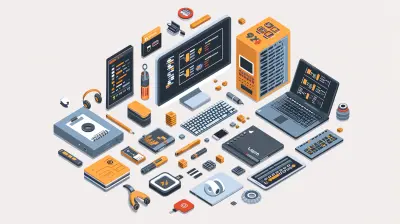
The Impact of AI on Developer Tooling and Automation
20 February 2026
Artificial Intelligence (AI) isn't just reshaping industries—it’s revolutionizing how developers build, debug, and automate their workflows. Gone are the days when coding meant writing every single line manually. AI-powered tools now suggest code, optimize performance, and even automate repetitive tasks, making developers' lives easier.
But hold on—does this mean AI is coming for developers' jobs? Not quite! Instead of replacing programmers, AI is becoming a powerful assistant, taking care of the tedious bits while developers focus on the creative and problem-solving aspects of coding.
So, how exactly is AI transforming developer tooling and automation? Let’s dive in.
AI-Powered Code Assistants: Your New Coding Buddy
If you've been coding for a while, you've likely encountered AI-driven code completion tools like GitHub Copilot, Tabnine, or Kite. These tools analyze your code in real-time and suggest completions, making development faster and smoother.Imagine having a supercharged autocomplete feature that not only completes your lines but also suggests entire functions. That’s what AI-powered code assistants do! They learn from vast amounts of code and predict what you need next, reducing the time spent searching for syntax or debugging basic errors.
Benefits of AI Code Assistants:
- Speed Up Development: No more Googling every little thing; AI completes your code as you type.- Error Reduction: AI can spot potential mistakes before they become bugs.
- Better Code Quality: Suggestions often follow best practices, improving readability and efficiency.
Of course, AI isn't perfect—it might suggest incorrect or redundant code. But as these tools evolve, their accuracy and usefulness continue to improve.
Intelligent Debugging: AI as Your Code Detective
Debugging can be a painful process. Sometimes, finding a bug feels like searching for a needle in a haystack. This is where AI-powered debugging tools step in.Platforms like DeepCode and Codota analyze your codebase and detect potential errors long before they cause problems. These tools use AI to recognize patterns in problematic code and provide recommendations instantly.
How AI Enhances Debugging:
- Early Error Detection: AI can identify potential pitfalls and suggest fixes before runtime.- Automatic Code Reviews: Some AI tools provide feedback on code quality, security vulnerabilities, and best practices.
- Faster Troubleshooting: Instead of spending hours tracking down a bug, AI can often highlight the issue in seconds.
Think of AI debug tools like an incredibly perceptive proofreader—they don’t just catch typos but also understand the context and flow.
Automated Code Generation: Writing Code with AI
What if you could generate entire applications with just a few prompts? AI-driven low-code and no-code platforms are making this a reality.Some tools, like OpenAI’s Codex, can generate whole functions based on simple descriptions. Want a Python function that calculates Fibonacci numbers? Just describe what you need, and the AI writes the code for you.
The Future of AI-Generated Code:
- Prototype Faster: Developers can build MVPs without writing every single line by hand.- Less Repetitive Coding: AI handles boilerplate code, allowing developers to focus on complex logic.
- Bridging the Knowledge Gap: Even those with minimal coding skills can use AI for basic programming tasks.
However, AI-generated code isn’t flawless—it still requires human oversight to ensure efficiency and security. But the potential for streamlining development is massive.
AI-Driven DevOps: Smarter Automation for Deployment
DevOps has always been about automation, but AI is taking it up a notch. From continuous integration to deployment and infrastructure monitoring, AI-infused DevOps tools optimize efficiency like never before.AI in DevOps Automation:
- Automated Testing: AI-driven testing tools predict where failures might occur and generate test cases more intelligently.- Smart Deployment Pipelines: AI optimizes resource allocation and minimizes deployment failures.
- Self-Healing Systems: Some AI-driven systems detect issues in real-time and auto-correct them without human intervention.
AI in DevOps isn’t just about efficiency—it’s about making systems more reliable, resilient, and less prone to downtime.
AI-Assisted Documentation: No More Boring Manual Writing
Let’s be honest—documenting code is no developer’s favorite task. Thankfully, AI is making documentation painless.Tools like Mintlify and DocuWriter auto-generate documentation by analyzing your code. They can describe functions, explain workflows, and even generate API docs.
Why AI-Generated Documentation is a Game Changer:
- Saves Time: Developers spend less time writing and more time coding.- Ensures Consistency: AI maintains uniform documentation structure across projects.
- Improves Clarity: AI can generate explanations based on best practices and readability standards.
While AI-generated documentation might not replace human-written docs entirely, it definitely makes the process quicker and more efficient.
AI and the Future of Developer Productivity
AI isn’t here to replace developers; it’s here to enhance their capabilities. By automating the repetitive and mundane aspects of coding, developers can focus on solving complex problems, designing better architectures, and innovating faster.Still, AI in development is a double-edged sword—it’s powerful, but it also requires careful implementation. Over-reliance on AI-generated code can lead to inefficiencies or security vulnerabilities. The key is to use AI as a collaborator rather than a crutch.
What’s Next?
Looking ahead, AI will continue to reshape the software development landscape. We can expect even smarter code assistants, improved debugging tools, and AI-powered project management systems that predict bottlenecks before they arise.The developers who embrace AI as an ally—not a competitor—will thrive in this new era.
Final Thoughts
AI is revolutionizing the world of developer tooling and automation. From code completion to intelligent debugging, automated deployments, and even documentation, AI is making development not only faster but also smarter.While AI can’t (and shouldn’t) replace human creativity and problem-solving, it is undoubtedly changing the way developers work. Whether you’re an experienced coder or just getting started, integrating AI into your workflow can supercharge your productivity.
So, what do you think? Is AI a game-changer for developers, or are we riding a hype wave? One thing’s for sure—AI is here to stay, and it’s only going to get better.
all images in this post were generated using AI tools
Category:
Developer ToolsAuthor:

Marcus Gray
Discussion
rate this article
2 comments
Mindy McKinstry
Oh great, just what we need—AI taking over our developer tools! Because who wouldn’t want a robot making all their coding mistakes for them? Can’t wait for the “AI Bug Fixing” feature to become a reality!
March 1, 2026 at 5:17 AM
Marcus Gray
I understand your concerns! While AI may introduce new challenges, its goal is to assist and enhance our coding process, reducing manual errors and improving efficiency. The future of AI in development is about collaboration, not replacement.
Aaron Jacobs
Imagine a world where your coffee brews itself while AI codes a game. Sounds far-fetched? Welcome to the future of developer tooling—where robots may just steal our jobs, but not our caffeine!" ☕🤖
February 21, 2026 at 1:21 PM
Marcus Gray
Indeed, it's an exciting glimpse into a future where AI enhances productivity, allowing developers to focus on creativity while automation handles the routine. Cheers to that! ☕✨