Machine Translation and the Quest for Real-Time Global Communication
28 July 2026
The dream is seductive: speak into your phone in English, and a Chinese factory manager hears flawless Mandarin instantly. A Japanese tourist asks for directions in Tokyo, and the local shopkeeper understands the query in their native dialect without a second of delay. We have been chasing this vision since the first computers hummed to life. But after seventy years of development, machine translation still sits in an awkward place between miracle and mirage.
Most people misunderstand what real-time machine translation actually demands. It is not simply speed. A system that translates a sentence in two hundred milliseconds but produces gibberish is worthless. The real challenge is compressing the entire pipeline of understanding, context analysis, cultural adaptation, and output generation into a timeframe that feels natural to human conversation. That pipeline is far more fragile than most users realize.
The Architecture Beneath the Speed
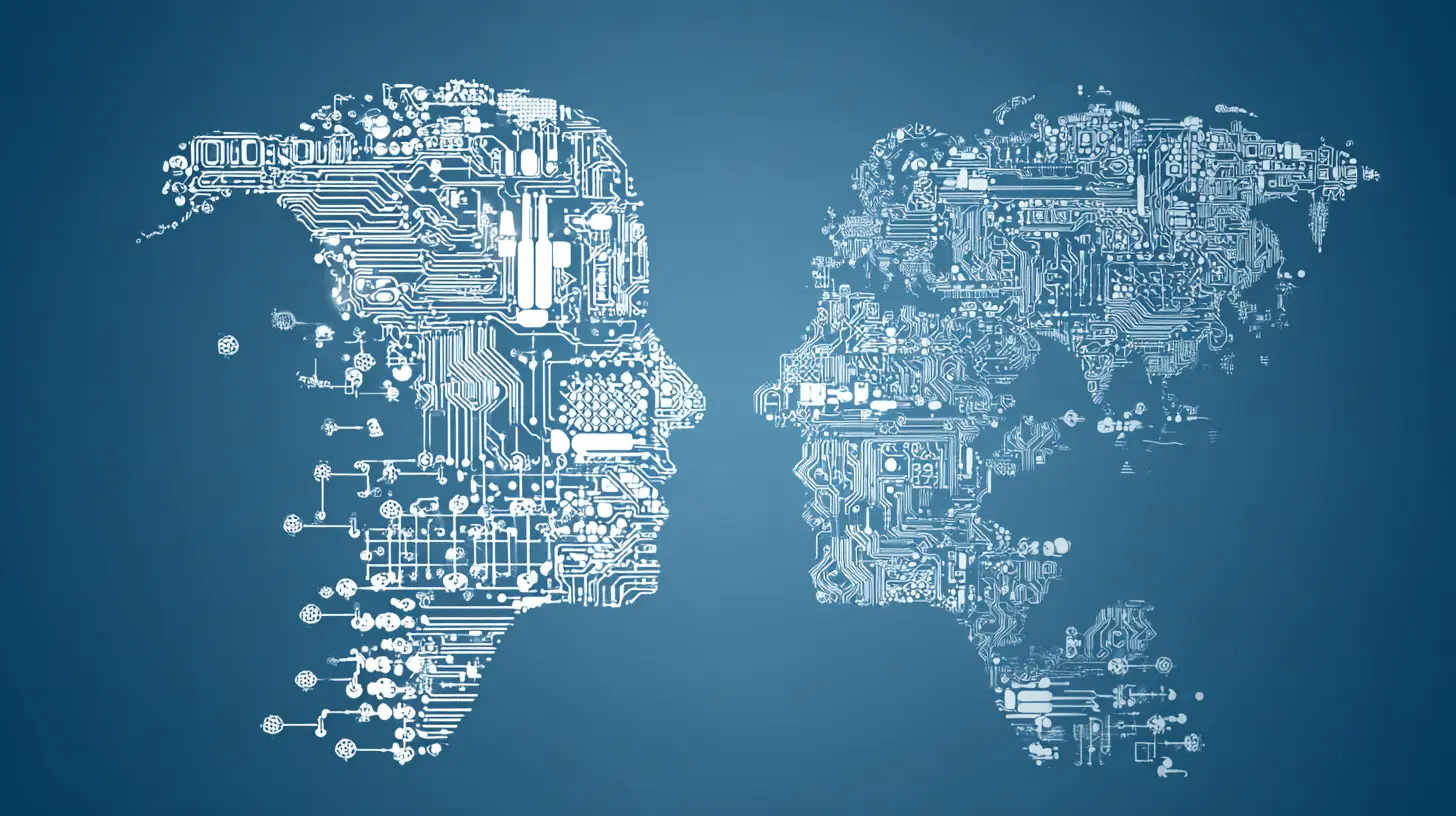
To understand why real-time translation remains difficult, you need to look at what happens inside a modern neural machine translation system during those few hundred milliseconds. The process is not a straight line from input to output. It involves encoding the source sentence into a numerical representation, aligning that representation with the target language's structure, and then decoding it word by word while maintaining coherence.The transformer architecture changed everything in 2017. Before that, recurrent neural networks processed words sequentially, which created a bottleneck. Transformers process entire sentences in parallel using attention mechanisms. This parallelization is what made real-time translation theoretically possible. But parallel processing introduces its own problem: the model needs to decide which parts of the input matter most at any given moment. That attention mechanism is computationally expensive.
When you see a live translation appear on your screen almost instantly, the system is making trade-offs. It might sacrifice accuracy on rare words to maintain speed. It might use a smaller model that fits into memory but lacks the depth to handle complex syntax. Every real-time system is a compromise between latency and quality. The best systems hide these compromises well, but they exist.
The Latency Trap
There is a common misconception that faster translation always means better user experience. This is false. Humans process speech at roughly 150 words per minute in their native language. If translation arrives significantly faster than that, the listener feels rushed. If it arrives slower, they lose the thread of conversation. The window of acceptable latency is surprisingly narrow.Professional simultaneous interpreters maintain a delay of about two to four seconds behind the speaker. That is the target for machine translation. Anything faster than one second can feel unnatural because the listener has not finished processing the previous utterance. Anything slower than four seconds creates awkward pauses that disrupt the flow of dialogue.
The problem is that languages do not map neatly onto each other in linear time. English expresses ideas with relatively few words compared to Japanese or Korean. A five-second English sentence might take ten seconds to express in Japanese. The machine cannot start translating until it has enough context to understand the sentence structure. If it starts too early, it produces fragmented output. If it waits too long, the delay becomes unacceptable.
Where Real-Time Translation Works Right Now
The current sweet spot for real-time machine translation is in controlled environments with predictable vocabulary. Customer service chatbots that handle product returns or booking confirmations work well because the domain is narrow. The system can be fine-tuned on thousands of example conversations specific to that industry. It knows the likely questions and the appropriate responses. This is not general translation. It is pattern matching dressed up as understanding.Travel translation apps work reasonably well for basic exchanges. Asking for the bill, finding a restroom, or confirming a hotel reservation are formulaic interactions. The machine has seen these patterns millions of times. But try to discuss the philosophical implications of a museum exhibit or negotiate a complex business contract, and the quality drops dramatically.
The best real-time systems are hybrid. They use neural machine translation for the core language conversion but layer on top of it rule-based systems for handling numbers, dates, and proper nouns. They also incorporate feedback loops where the user can correct errors, and the system adjusts its output for subsequent translations. This hybrid approach acknowledges that pure machine learning is not enough.

The Context Problem That Refuses to Die
The single biggest obstacle to real-time global communication through machine translation is context. Humans rely on shared knowledge that is never explicitly stated. When an American says "I'll catch you later," the British listener knows this means goodbye, not a literal future act of catching. A machine trained on formal written text might produce a literal translation that confuses the listener.Context operates at multiple levels simultaneously. There is the immediate conversational context: what was said in the previous sentence. There is the cultural context: what is considered polite or rude in the target language. There is the domain context: whether the conversation is medical, legal, or casual. And there is the pragmatic context: what the speaker actually intends to achieve with their utterance.
Real-time systems struggle to incorporate all these layers because they do not have time. A human interpreter can ask for clarification. A machine cannot, because that would break the illusion of seamlessness. So the machine guesses. Sometimes it guesses correctly. When it guesses wrong, the result can range from mildly confusing to genuinely dangerous.
Medical translation errors have killed people. A mistranslated dosage instruction or a misunderstood allergy description can have catastrophic consequences. This is why no responsible healthcare system relies on real-time machine translation for critical communications. The stakes are too high, and the error rates are still too unpredictable.
The Cultural Blind Spot
Even when the words are technically correct, the translation can fail because of cultural assumptions embedded in the language. Japanese uses different levels of politeness depending on the social hierarchy between speakers. Spanish has formal and informal "you" that carry social weight. Arabic has gender-specific verb conjugations that reveal information about the speaker and listener.A machine translation system that does not know the relationship between the speakers will choose the wrong register. This can come across as rude, overly familiar, or strangely distant. The listener might understand the words but feel that something is off. They might not consciously identify the problem, but they will trust the communication less.
Real-time systems cannot ask for this information without breaking the flow. Some systems attempt to infer social context from the conversation history, but this is unreliable. The safest approach is to default to formal register in most languages, but this creates its own problems. Formal Japanese sounds strange between close friends. Formal Spanish between siblings is almost comical.
The Trade-Off Between Fluency and Fidelity
Every machine translation system faces a fundamental choice: produce output that is grammatically perfect but loses meaning, or preserve meaning at the cost of awkward phrasing. This is known as the fluency-fidelity trade-off. Real-time systems lean heavily toward fluency because awkward output breaks the user's trust faster than minor inaccuracies.The result is that real-time translations often smooth over ambiguity. If the source sentence could mean two different things, the machine picks the most statistically likely interpretation and runs with it. It does not flag the ambiguity. It does not offer alternatives. It presents one clean output as if it were certain. This creates a false sense of reliability.
For casual conversation, this is usually fine. If the machine misinterprets a joke, the consequences are minimal. But in legal, financial, or technical contexts, this smoothing behavior is dangerous. The user assumes the translation is accurate because it reads naturally. They make decisions based on that assumption. When the assumption is wrong, the results can be expensive or legally problematic.
The Data Dependency That Limits Progress
Neural machine translation requires enormous amounts of parallel text: the same content written in two languages. For high-resource language pairs like English-French or English-Spanish, there are millions of words of translated government documents, corporate reports, and literary works. The models trained on this data perform well because they have seen the patterns.For low-resource language pairs like Swahili-Korean or Burmese-Dutch, the parallel data barely exists. The models are trained on tiny datasets and perform poorly. This creates a digital language hierarchy where some languages get excellent real-time translation and others get barely functional output. The gap is not closing quickly because collecting parallel data for every language pair is prohibitively expensive.
Zero-shot translation, where a model translates between languages it was not explicitly trained on, has shown promise but remains unreliable. The model essentially invents translations based on patterns learned from other language pairs. Sometimes this works. Often it produces nonsense. Real-time zero-shot translation is even worse because the model has less time to reason through the gaps in its knowledge.
The Hardware Reality
Running a modern neural machine translation model requires significant computational resources. The models have hundreds of millions of parameters. Loading them into memory takes time. Processing each sentence through the attention layers requires matrix multiplications that strain even powerful GPUs.On a high-end smartphone with a dedicated neural processing unit, real-time translation is feasible for short utterances. The phone can keep a small model loaded in memory and process speech locally without sending data to the cloud. This is the ideal scenario because it eliminates network latency. But most phones cannot run the largest models. They use compressed versions that sacrifice accuracy for speed.
Cloud-based translation offers better accuracy because it can use full-sized models, but it introduces network latency. The speech must be captured, sent to a server, processed, and returned. Even with fast connections, this adds hundreds of milliseconds. In real-time conversation, those milliseconds matter. The user notices the delay and becomes impatient.
The practical solution is a tiered approach. Simple phrases are translated locally on the device using a small model. Complex sentences are sent to the cloud for better processing. The system must decide which path to take within a few milliseconds of receiving the input. This decision logic is itself a difficult engineering problem.
Common Mistakes Organizations Make
Organizations that adopt real-time machine translation often make the same errors. They assume that because the technology works for one use case, it will work for all use cases. They deploy translation systems for customer-facing applications without testing them on the actual vocabulary and conversation patterns their customers use. They treat the system as a replacement for human translators rather than a tool that augments human capability.The most costly mistake is using real-time translation for high-stakes communication without a fallback mechanism. A company that replaces its human customer support team with machine translation for all languages is asking for disaster. The machine will make errors. When it does, there must be a human who can step in and correct the problem. This requires a workflow design that most organizations ignore.
Another common mistake is failing to update the translation models regularly. Language evolves. New slang emerges. New products and services create new vocabulary. A model trained on data from two years ago will miss current usage patterns. Real-time systems need continuous retraining to stay relevant. Most organizations treat translation as a one-time implementation rather than an ongoing maintenance task.
Best Practices for Real-World Deployment
If you are building a system that uses real-time machine translation, start with a clear definition of acceptable quality. What error rate can your users tolerate? What are the consequences of a mistranslation? These answers determine how much you should invest in the translation pipeline.Use domain-specific models whenever possible. A general-purpose translation model is a jack of all trades and master of none. Fine-tune your models on data from your specific industry. If you work in healthcare, train on medical transcripts. If you work in finance, train on earnings calls and regulatory filings. The improvement in accuracy is dramatic.
Implement confidence scoring. Every translation should come with a confidence score that indicates how certain the system is about its output. Low-confidence translations should be flagged for human review or handled differently. This is the single most important safety mechanism for real-time systems, and it is rarely implemented.
Build in user feedback. Allow users to rate translations and correct errors. Use this feedback to improve the model over time. A real-time translation system that does not learn from its mistakes is a static system that will never get better.
The Future Is Not What You Expect
The next breakthrough in real-time machine translation will not come from larger models or faster hardware. It will come from better understanding of context and intention. Researchers are working on systems that can infer the speaker's goal from the conversation and adjust translations accordingly. These systems will not just translate words. They will translate meaning.Multimodal translation, where the system uses visual and auditory cues alongside the text, offers significant promise. A system that can see the speaker's facial expressions and hear their tone of voice has more information to work with. It can detect sarcasm, hesitation, and emphasis. These signals are lost in pure text translation.
But the ultimate solution may not be machine translation at all. Augmented reality headsets that overlay translated text onto the real world, combined with bone conduction audio that delivers translation directly to the inner ear, could create a seamless experience that does not require the user to look at a screen or hold a device. The translation becomes invisible. That is the real goal.
When Not to Use Real-Time Translation
There are situations where real-time machine translation is actively harmful. Any communication where legal liability exists should not rely on machine translation without human oversight. Contracts, medical instructions, safety warnings, and financial disclosures require precision that current systems cannot guarantee.Cross-cultural negotiations benefit from human interpreters who can read body language and adjust their approach based on non-verbal cues. Machines miss these signals entirely. A human interpreter can tell you that the other party is uncomfortable or confused. A machine cannot.
Creative content like poetry, advertising slogans, and humor should never be machine translated in real time. These forms of communication rely on wordplay, cultural references, and emotional resonance that machines do not understand. The result will be technically correct but emotionally dead.
The Honest Assessment
Real-time machine translation is a remarkable achievement that works well in specific contexts and fails in others. It is not the universal communication solution that science fiction promised. It is a tool with clear strengths and equally clear limitations.The technology will continue to improve, but it will never reach perfect accuracy because language is not a solvable problem. Language is a living, evolving, context-dependent system of human expression. Machines can approximate understanding, but they cannot truly comprehend. The quest for real-time global communication will always be a negotiation between what is technically possible and what is humanly necessary.
The best approach is to use machine translation for what it does well: handling routine, predictable, low-stakes communication. For everything else, keep humans in the loop. The future of global communication is not machines replacing humans. It is machines and humans working together, each covering the other's weaknesses.
all images in this post were generated using AI tools
Category:
Natural Language ProcessingAuthor:

Marcus Gray