Integrating AI-Driven Threat Detection in Network Design
13 June 2026
Remember when building a network was like building a castle? You dug a moat (the firewall), raised the drawbridge (the VPN), and posted guards at the gate (intrusion detection systems). It worked for a while. The bad guys had to batter down the front door, and your guards knew exactly what a battering ram looked like.
That castle is now a glass house. The moat is a puddle. The bad guys aren't using battering rams anymore. They are using invisible keys, they are already inside pretending to be your best friend, and sometimes they are even the person you hired to fix the plumbing.
This is the reality of modern network security. The old perimeter-based model is dead. We killed it ourselves by moving to the cloud, embracing remote work, and connecting everything from coffee machines to MRI machines to the same pipe. So, what do we do? We stop building castles and start building immune systems. And the nervous system of that immune system is AI-driven threat detection, woven directly into the fabric of the network design.
Let's be honest. Throwing an AI tool on top of a legacy network is like putting a jet engine on a bicycle. You will get a lot of noise, a lot of speed, and a spectacular crash. The real magic, the deep, thought-provoking shift, happens when you design the network around the AI from the ground up.
Why Your Old "Detect and Respond" is a Funeral Plan
Most organizations today operate on a "detect and respond" model. Something bad happens. An alert fires. A human wakes up at 3 AM, looks at a dashboard, and starts triaging. This is reactive. It is slow. And in the age of ransomware that encrypts your entire domain in 45 minutes, "slow" is just a synonym for "compromised."The problem isn't the humans. The problem is the architecture. Traditional network design prioritizes connectivity and performance. Security is an afterthought, bolted on like a security camera you bought at a flea market. You have logs pouring into a SIEM (Security Information and Event Management) system, but the sheer volume is overwhelming. You are drowning in alerts but starving for context.
This is where the "perplexity" of the modern threat landscape meets the "burstiness" of an attack. An attack isn't a steady stream of bad packets. It is a sudden, chaotic explosion of activity that looks like normal behavior until it is too late. A human analyst cannot process that burst. A rule-based system cannot predict that perplexity. You need a brain that can handle the noise and find the signal.
The Shift to "Prevent and Predict" Through Design
Integrating AI into network design isn't about buying a "magic box" that sits in the corner and glows. It is about changing the fundamental philosophy of how you build the network. You are moving from a "trust but verify" model to a "never trust, always verify" model. This is Zero Trust, but with a turbocharger.Think of your network as a city. In the old design, you had a city wall and a few guarded gates. Once you were inside, you could walk into any building. In the new design, every single building has its own guard. Every door requires a new key. Every hallway has a sensor.
AI is the intelligence that ties all those guards and sensors together. It doesn't just look for a known bad guy (a signature). It looks for a guy who is acting suspicious. It asks questions like:
* "Why is the CFO's laptop downloading 2TB of data from the HR server at 3 AM?"
* "Why is the printer in the break room suddenly trying to talk to a server in a country we don't do business with?"
* "Why is this new employee's account logging in from two different continents in the same hour?"
These are behavioral questions. A human cannot answer them in real-time for a network of 10,000 devices. An AI can.
The Three Pillars of an AI-Native Network Architecture
So, how do you actually do this? You don't just buy a tool. You redesign the pillars of your network.1. The Data Fabric: Stop Starving Your AI
The biggest mistake people make is starving the AI. You cannot train a guard dog by showing it one picture of a squirrel. An AI model is only as good as the data it consumes. If your network design doesn't feed the AI clean, rich, and contextual data, you are wasting your money.
This means you need a data fabric. This is a layer within your network that is dedicated to collecting telemetry from everything. Not just firewall logs. Not just server logs. I am talking about DNS queries, DHCP logs, NetFlow data, cloud API calls, endpoint behavior, and even physical access logs.
In your network design, you need to build "data taps" at every junction. Your switches, routers, and firewalls should be configured to send a constant stream of metadata to a central data lake. This is not a "log collection" project. This is a "nervous system" project. The AI needs to see the heartbeat of the network, not just the screams.
2. The Segmentation of Chaos: Micro-Segmentation with AI Brains
We talked about the city with no walls. That is micro-segmentation. You break your network into tiny, isolated zones. But doing this manually is a nightmare. You have to write thousands of firewall rules, and you will inevitably break something.
AI changes this. In a modern design, the AI learns the normal traffic patterns. It watches how applications talk to each other. It understands that "Application A needs to talk to Database B on port 443, and nothing else."
Once it learns this, it can automatically create the micro-segments. It builds the walls for you. And more importantly, it dynamically adjusts them. If the AI sees that a compromised workstation is trying to talk to a server it has never talked to before, it doesn't just send an alert. It can automatically block that connection at the switch level. It is a living, breathing firewall that adapts to the threat in milliseconds.
This is the "burstiness" of defense. The attack happens in a burst. The AI responds in a burst. It cuts off the blood supply to the cancer before the human even knows the cancer exists.
3. The Human Interface: The "Why" is More Important Than the "What"
Here is the part that keeps me up at night. We are designing networks that can think faster than we can. This is terrifying and beautiful. But if the AI just spits out a thousand "blocked" events, we are back to square one.
The final pillar of the design is the human interface. The AI needs to tell a story. It needs to provide "perplexity" in a digestible way.
Imagine you are a security analyst. The old way: "Alert: Suspicious outbound connection from 10.0.0.45."
The new way, designed with AI in mind: "John Smith (HR Manager) has a credential that was used by a device in Brazil 20 minutes ago. That same credential is now attempting to access the payroll database from the conference room PC. This behavior has a 95% anomaly score. I have isolated the conference room switch and revoked the session. Here is the full timeline and the raw packet capture for your review."
The AI does the heavy lifting of correlation. It solves the "perplexity" of the attack chain. The human's job is no longer to find the needle in the haystack. The human's job is to decide what to do with the needle the AI just handed them. The network design must prioritize this "narrative" output. It must be built to provide context, not just data.
The Hard Truth: You Have to Rewire the Brain
I am not going to lie to you. This is hard. Integrating AI-driven threat detection into network design is not a weekend project. It requires a fundamental shift in how you think about your infrastructure.The Cost of Complexity
You will need new skills. Your network engineers need to understand data science. Your security team needs to understand network topology. You are asking for a convergence of two worlds that have historically been siloed. You will fight turf wars. "That's a security problem." "No, that's a network problem."
The answer is: It is both. The design must create a single pane of glass where both teams speak the same language. The network team builds the data highway. The security team defines the rules of the road. The AI is the traffic cop that sees everything.
The Problem of the "Black Box"
Another hard truth is trust. AI models are often black boxes. They say "block this," but they cannot always explain why in a way a human auditor can understand. In a highly regulated industry (finance, healthcare), this is a deal-breaker.
Your network design must include a "model explainability" layer. You need to choose AI tools that can provide a "reasoning path." You need to design your logging to capture not just the action the AI took, but the features it used to make that decision. You must build a system that can be audited, not just a system that works.
The False Positive Trap
Finally, be prepared for the "cry wolf" effect. An AI that is too sensitive will block legitimate traffic. Your sales team will lose a deal because the AI thought a legitimate demo was a data exfiltration attempt. Your CEO will get locked out of their own email.
The network design must include a "feedback loop." When a human overrides the AI, that override must be fed back into the model. The AI must learn from its mistakes. This is not a "set it and forget it" system. It is a living organism that needs constant training and care.
A Practical Blueprint for the Skeptic
Okay, you are convinced it is the future, but you have a budget meeting next week. What do you do? You don't have to redesign the entire internet. You start small.1. Pick a Pain Point. Don't try to protect everything. Find your most valuable asset. Is it the customer database? The source code repository? Design a micro-segment around that single asset. Put an AI sensor at the entrance to that segment.
2. Start with DNS. DNS is the phonebook of the internet. Malware loves to use DNS to call home. Deploying an AI-driven DNS security tool is the lowest hanging fruit. It requires almost no network redesign, and it gives you immediate visibility into command-and-control traffic.
3. Automate the Boring Stuff. Use AI to automate your firewall rule changes. Let the AI handle the "allow traffic from App A to DB B" requests. This frees up your humans to focus on the complex, thought-provoking work of threat hunting.
4. Run a Simulation. Before you buy anything, simulate an attack on your current network. See how long it takes to detect. Then, simulate the same attack on a redesigned segment with AI. The difference in time will be your business case.
The Final Thought: From Security to Resilience
We are moving from an era of "security" to an era of "resilience." You cannot build a wall high enough to keep everyone out. The goal is no longer to prevent every breach. The goal is to detect the breach in seconds, contain it in minutes, and recover in hours.Integrating AI into your network design is the only way to achieve that speed. It is not about replacing humans. It is about giving them superpowers. It is about building a network that can defend itself, learn from its wounds, and get stronger.
So, ask yourself: Is your network a castle waiting to be sieged, or is it a living organism ready to fight back? The choice is yours, but the clock is ticking. The bad guys are already using AI to attack you. It is time to design a network that uses AI to defend you.
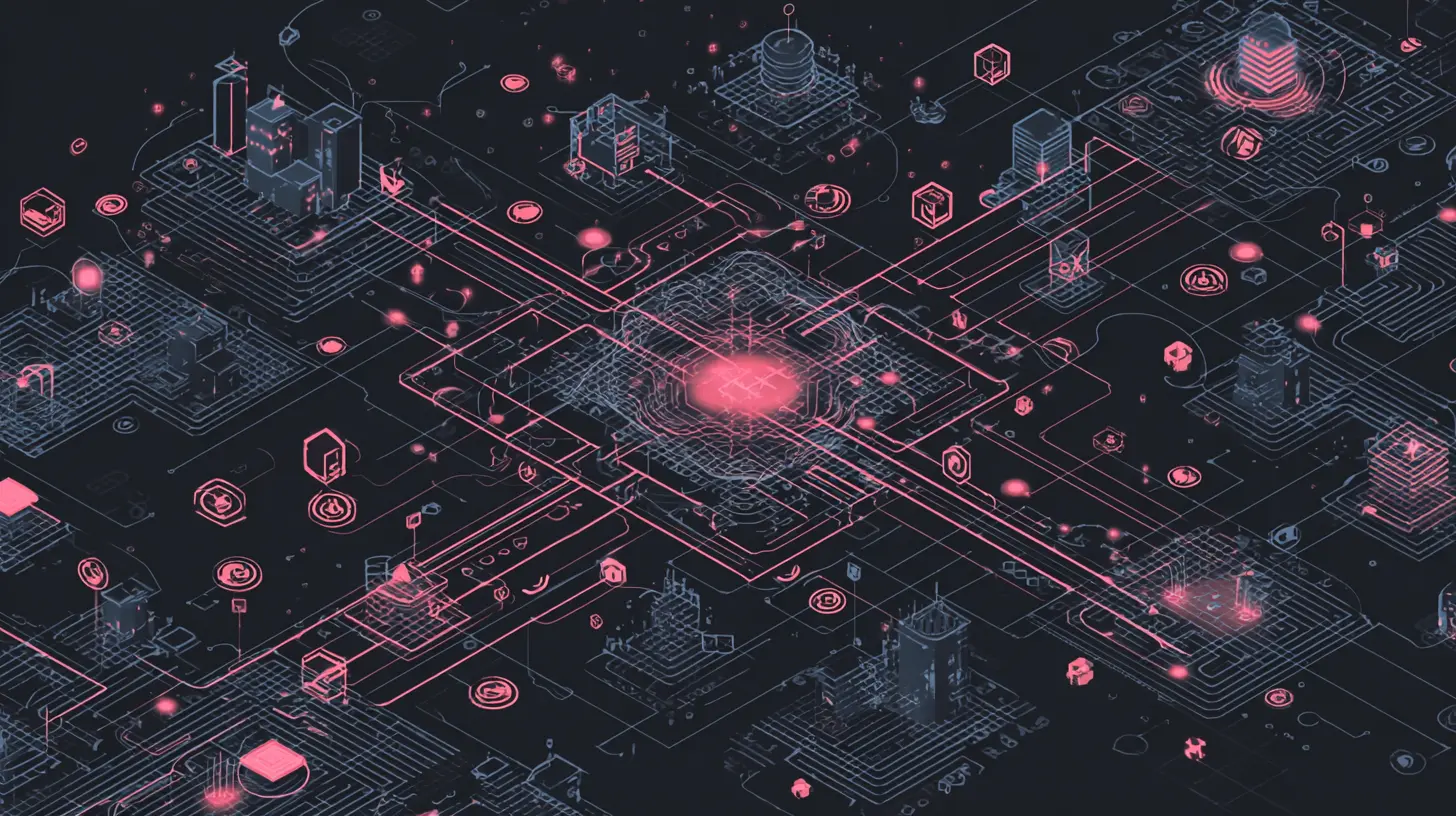
all images in this post were generated using AI tools
Category:
Network InfrastructureAuthor:

Marcus Gray
Discussion
rate this article
1 comments
Riven Mercado
In a world of constant change, where shadows linger unseen, AI becomes our vigilant guardian, weaving security into the fabric of our networks, illuminating the path ahead.
June 24, 2026 at 3:54 AM
Marcus Gray
Thank you for the thoughtful comment. AI truly serves as a key protector in our ever-evolving digital landscape. Excited to see how it shapes our networks.