How Real-Time Analytics Are Enhancing Team Collaboration
24 July 2026

The Shift from Static Dashboards to Living Data
Most teams today operate with a fundamental misunderstanding of what real-time analytics actually means. They assume it refers to dashboards that refresh every few minutes, or perhaps data that updates overnight instead of weekly. But genuine real-time analytics is something far more transformative: it is the ability to act on information as it emerges, not after it has been curated, cleaned, and summarized.When teams collaborate, they are essentially trying to synchronize their understanding of a shared reality. Traditional workflows force people to align their mental models through meetings, emails, or documents that are already out of date. Real-time analytics removes that lag. It allows every team member to see the same data at the same moment, and more importantly, to react to changes in that data without waiting for someone to broadcast an update.
This is not about faster reporting. It is about changing the fundamental rhythm of how people work together. Instead of a weekly sync to review metrics, teams can have a continuous awareness of what is happening. That shift from periodic to continuous awareness is where collaboration stops being a scheduled activity and becomes an ambient property of the work itself.

Why Latency Kills Collaboration
Collaboration suffers most not from disagreement but from misalignment. Two people can have perfectly valid interpretations of a situation, but if they are looking at different versions of the data, their interpretations will diverge. The classic example is a sales team where one person sees a deal as "closeable" based on last week's engagement data, while another sees it as "stalled" based on real-time product usage signals. Neither is wrong. They are just operating on different temporal slices of reality.The cost of this latency is not just confusion. It cascades into duplicated effort, missed opportunities, and decisions made on outdated assumptions. In fast-moving environments like SaaS operations, e-commerce logistics, or financial trading, a five-minute delay in data can render a collaborative decision not just suboptimal but actively harmful.
Real-time analytics solves this by establishing a single source of truth that updates at the speed of events. When every team member sees the same number, updated at the same time, the conversation shifts from "what do we think is happening" to "what should we do about what is happening." That is a profound difference. It moves the team from debate to action.
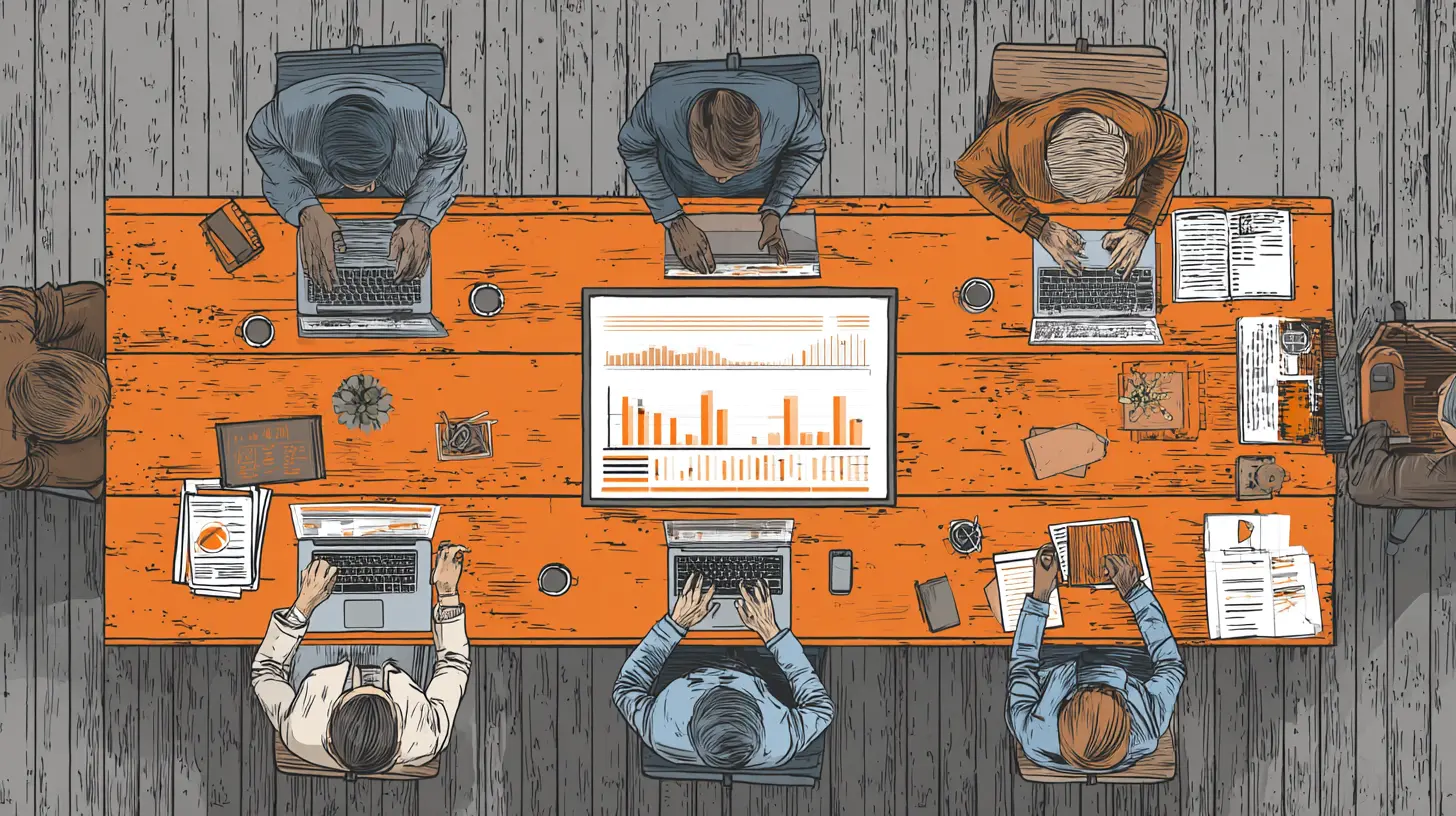
The Technical Foundation That Makes It Work
Understanding how real-time analytics enhances collaboration requires some awareness of the technical underpinnings, because the architecture determines what is possible. Not all "real-time" systems are equal.At the simplest level, there are systems that poll for new data on a schedule. These are not truly real-time. They are fast batch systems. A dashboard that refreshes every thirty seconds still has a thirty-second window where different team members could see different data if they loaded the page at different times.
True real-time analytics relies on event streaming architectures, typically built on technologies like Apache Kafka, Amazon Kinesis, or similar message brokers. In these systems, data is pushed to consumers the moment it is generated. There is no polling interval. Every event is immediately available to any system or person subscribed to that stream.
For collaboration, this means that when a customer submits a support ticket, updates their billing information, and triggers a product usage spike all within the same minute, every relevant team member sees that sequence of events unfold simultaneously. The support team sees the ticket. The finance team sees the billing change. The product team sees the usage spike. And crucially, they can all see each other's awareness of those events.
This is where the collaboration benefit multiplies. Real-time analytics does not just show data. It can show who is looking at what data, what actions have already been taken, and what decisions are pending. That awareness of awareness is the key ingredient for effective teamwork.

Common Misconceptions About Real-Time Collaboration
One persistent myth is that real-time analytics means every team member needs to monitor a dashboard constantly. That is not only impractical, it is counterproductive. Constant monitoring leads to alert fatigue and reduces the signal-to-noise ratio of the data.The better approach is to use real-time analytics as a trigger for exception-based collaboration. Teams should not need to watch data streams continuously. They should be notified when the data deviates from expected patterns. The real-time aspect ensures that those notifications arrive immediately, and that when multiple people respond, they are all working from the same current state.
Another misconception is that real-time analytics requires perfect data. In practice, real-time data is often less clean than batch-processed data. It arrives raw, sometimes out of order, and occasionally duplicated. Teams that insist on perfectly clean data before collaborating will never achieve real-time collaboration. The trade-off is between precision and speed. For many collaborative decisions, approximate immediacy is far more valuable than perfect latency.
A third mistake is assuming that real-time analytics replaces human judgment. It does not. It augments it. The analytics provide the factual foundation, but the collaboration still requires people to interpret, negotiate, and decide. Real-time data makes those human interactions more productive because they are grounded in a shared, current reality rather than in competing narratives.
Practical Applications Across Team Functions
Engineering and Product Development
In software engineering, real-time analytics transforms how teams handle incidents. When a production outage occurs, traditional workflows involve someone noticing the problem, creating a ticket, and then waiting for others to see it. With real-time analytics, the monitoring system detects the anomaly, automatically correlates it with recent deployments, and surfaces the relevant logs and metrics to every on-call engineer simultaneously.The collaboration that follows is dramatically different. Instead of spending the first ten minutes aligning on what happened, engineers can immediately start investigating root causes because they all see the same data at the same time. They can see which services are affected, which metrics are degrading, and which changes were recently made. The conversation shifts from "what do we know" to "what should we try."
Beyond incident response, real-time analytics improves sprint planning and feature development. Teams can see how new code is performing in production within minutes of deployment. If a feature causes unexpected behavior, the product manager, designer, and engineers can all see the impact simultaneously and decide whether to roll back, patch, or adjust.
Sales and Customer Success
Sales teams have traditionally operated on CRM data that lags by hours or days. A deal might show as "open" in the system even though the prospect has already gone dark. Real-time analytics closes that gap.When a sales rep sees that a prospect has just visited the pricing page again, downloaded a white paper, and opened a proposal, that information is available to the entire team in real time. The sales manager can see that the rep is actively working the deal. The customer success manager can see that the prospect might need onboarding support soon. The marketing team can see which content is driving engagement.
This shared awareness prevents the classic problem of multiple team members contacting the same prospect with different messages. It also enables faster escalation. If a deal starts slipping, the team can rally around it immediately rather than discovering the problem during the weekly forecast meeting.
Supply Chain and Operations
In logistics and supply chain management, real-time analytics is arguably the most impactful. When a shipment is delayed, the traditional approach involves someone at the warehouse noticing the delay, updating a spreadsheet, and then emailing stakeholders. By the time everyone is informed, the delay has already compounded.With real-time analytics, the tracking system updates the moment the delay occurs. The warehouse team sees it. The inventory planner sees it. The customer service team sees it. And they can all begin collaborating on a solution immediately. Perhaps the warehouse reroutes another shipment. The planner adjusts inventory allocations. The customer service team proactively notifies the client. All of this happens in parallel because everyone has the same information at the same time.
The collaboration here is not just faster. It is more intelligent. The team can see the ripple effects of the delay in real time. They can assess which customers will be affected, which inventory buffers are available, and which alternatives exist. That holistic view is impossible with delayed data.
Trade-Offs and When Real-Time Is Not the Answer
Real-time analytics is not a universal solution. It comes with significant costs and trade-offs that teams must evaluate honestly.The most obvious cost is infrastructure. Streaming architectures are more complex and expensive to maintain than batch systems. They require specialized skills, robust monitoring, and careful handling of data consistency. For teams that do not have the engineering resources to support a real-time pipeline, attempting to force real-time analytics can lead to brittle systems that provide unreliable data.
There is also a cognitive cost. Humans are not designed to process continuous streams of information. When every team member is exposed to constant updates, the result can be anxiety, distraction, and decision paralysis. Real-time analytics must be paired with thoughtful notification design, aggregation, and filtering to avoid overwhelming people.
Some decisions genuinely do not benefit from real-time data. Strategic planning, annual budgeting, and long-term product roadmaps are better served by carefully curated, historical data that has been cleaned and normalized. Trying to make those decisions with raw, real-time data introduces noise that obscures the signal.
The rule of thumb is this: if the decision requires understanding a trend over time, batch data is usually better. If the decision requires understanding the current state of a dynamic system, real-time data is essential. Collaboration on operational decisions benefits from real-time analytics. Collaboration on strategic decisions does not.
Best Practices for Implementing Real-Time Collaboration
Start with the decision, not the data. The most common failure is to build a real-time pipeline because it seems technically impressive, without first identifying what collaborative decisions it will improve. Map out the specific moments where delayed data causes misalignment or missed opportunities. Those moments are your targets.Design for shared context, not shared screens. The goal is not to have everyone looking at the same dashboard simultaneously. It is to have everyone operating from the same understanding of the current reality. That means the analytics should be embedded into the tools people already use, not forced into a separate monitoring application.
Build in awareness of actions, not just events. The most powerful real-time collaboration tools show not just what is happening, but what people are doing about it. If a support agent is already handling a critical ticket, the system should surface that action so other team members do not duplicate the effort. This is the difference between passive dashboards and active collaboration platforms.
Establish clear ownership for data quality in real time. Batch systems can tolerate data quality issues because there is time to clean and validate before anyone sees the numbers. Real-time systems do not have that luxury. Someone must be responsible for monitoring the incoming data stream for anomalies, duplicates, or gaps. Without that ownership, the shared data will lose trust.
Train teams on the difference between real-time awareness and real-time reaction. Just because you can see something immediately does not mean you should act immediately. Some situations benefit from a brief pause to gather more context. Real-time analytics should empower teams to make better timed decisions, not just faster ones.
The Psychological Shift in Team Dynamics
Perhaps the most underappreciated effect of real-time analytics on collaboration is the psychological change it creates. When data is shared instantly and transparently, it reduces the tendency for silos and information hoarding. People cannot claim ignorance of a situation when the data is visible to everyone. That transparency creates accountability, but it also creates trust.Teams that operate on shared real-time data tend to communicate more concisely. There is less need for long status updates because everyone already knows the current state. Meetings become shorter and more focused on problem-solving rather than status reporting. The analytics do the reporting. The humans do the thinking.
However, this transparency can also create discomfort. Some team members may feel exposed if their performance metrics are visible in real time. Leaders must be careful to use real-time analytics for situational awareness, not for micromanagement. The goal is to enable better collaboration, not to create a surveillance environment.
The most successful implementations treat real-time data as a shared resource that the team owns collectively, not as a management tool imposed from above. When the team itself decides what metrics matter and how they will be displayed, the collaboration benefits are far greater than when a centralized authority dictates the dashboard.
Common Mistakes That Undermine Real-Time Collaboration
One frequent mistake is over-customization. Teams that build highly specific dashboards for each role end up recreating silos in the name of relevance. The sales dashboard shows only sales data. The engineering dashboard shows only system metrics. The collaboration benefit disappears because no one sees the full picture.The better approach is to build a unified view that shows all relevant data, with role-based filtering that can be toggled on or off. Everyone should have access to the complete picture, even if they choose to focus on their own domain most of the time.
Another mistake is treating real-time data as permanent truth. Real-time data is inherently provisional. It may be corrected, adjusted, or reordered as more information arrives. Teams that treat every real-time data point as an immutable fact will make bad decisions. The collaboration should include an understanding that real-time data is the best available estimate, not a final statement.
A third mistake is ignoring the human latency. Even with perfect real-time data, people still need time to process, discuss, and decide. The analytics can show the data instantly, but the collaboration still takes time. Teams that expect instant decisions from real-time data will be disappointed. Real-time analytics compresses the information gap, but it does not eliminate the human response time.
The Future of Real-Time Collaborative Analytics
Looking ahead, the integration of real-time analytics with collaboration tools will become more seamless. Instead of separate dashboards and separate chat platforms, the data will be embedded directly into the communication channels. When someone sends a message about a customer issue, the relevant real-time metrics will be attached automatically. When a decision is made, the impact will be visible to the team immediately.Machine learning will play a larger role in reducing noise. Instead of every team member receiving every update, intelligent systems will route relevant alerts to the right people at the right time. The collaboration will be triggered by the analytics, not driven by constant monitoring.
The teams that will benefit most are those that treat real-time analytics not as a technology project but as a cultural shift. It requires a willingness to share data openly, to trust that others will use it responsibly, and to focus on collective outcomes rather than individual metrics. The technology enables the collaboration, but the culture determines whether it actually happens.
In the end, real-time analytics enhances team collaboration by removing the single biggest obstacle to effective teamwork: the gap between what is happening and what people know. When that gap closes, teams can stop coordinating and start creating.
all images in this post were generated using AI tools
Category:
Collaborative SoftwareAuthor:

Marcus Gray
Discussion
rate this article
1 comments
Merida Peterson
Real-time analytics are transforming team collaboration by providing immediate insights that inform decision-making. This instant access to data fosters transparency and accountability, allowing teams to respond quickly to challenges. As a result, collaboration becomes more dynamic and effective, driving overall productivity and innovation.
July 24, 2026 at 4:10 AM