How NLP Is Powering the Next Generation of Smart Assistants
7 August 2026
The first generation of smart assistants was a party trick. You asked for the weather, set a timer, maybe played a song. It felt magical for about a week, then the limitations became glaring. Ask a follow-up question, and the system froze. Request something with implied context, and you got a canned web search result. The magic was thin.
That era is ending. The next generation of smart assistants is not just faster or louder. It is fundamentally different because it is built on a far more sophisticated foundation of Natural Language Processing (NLP). We are moving from pattern-matching to actual understanding, from keyword triggers to conversational reasoning, and from reactive commands to proactive assistance. This shift is not incremental. It is architectural, and it changes what users should expect and what developers must build.
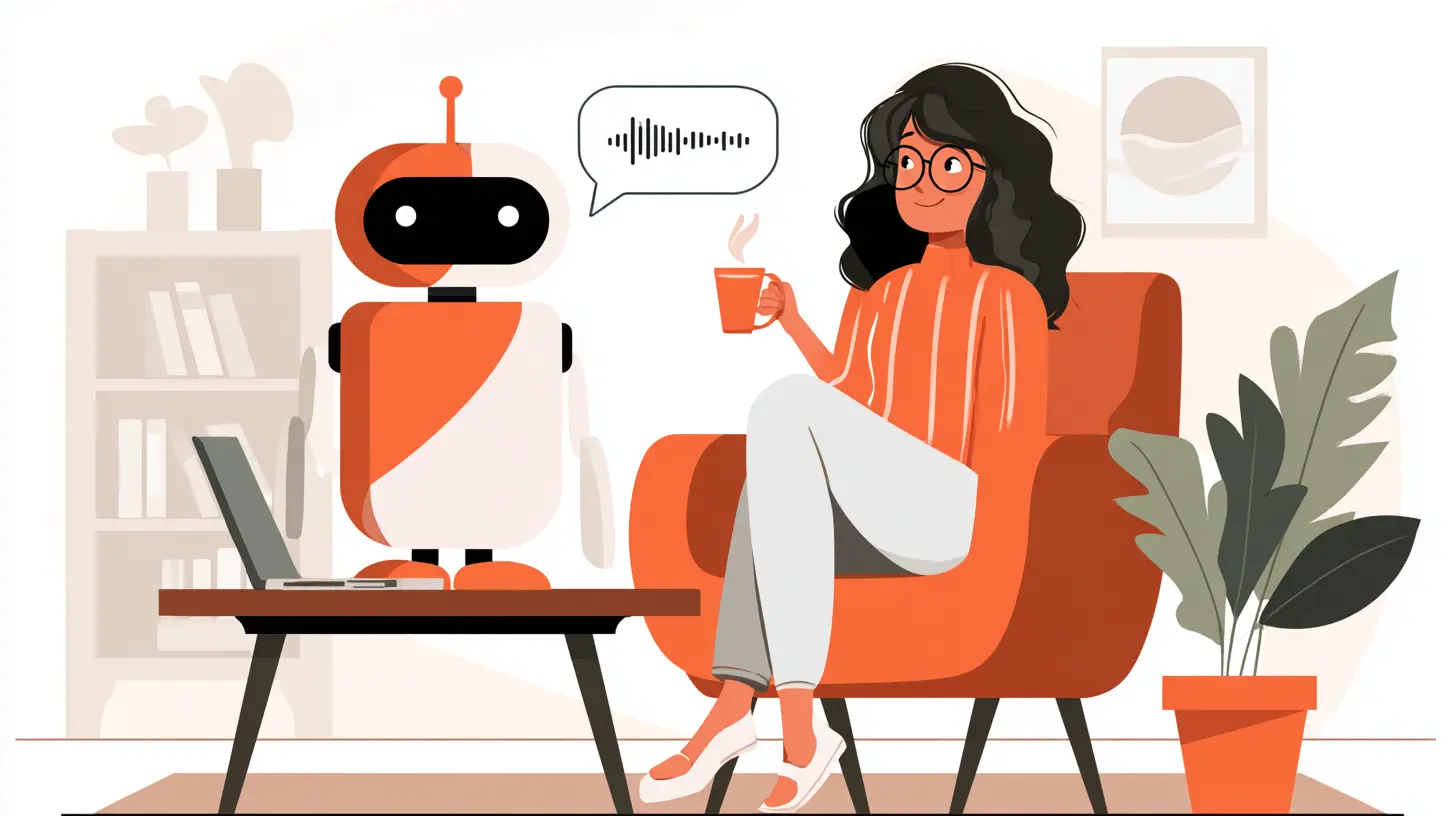
The Core Shift: From Commands to Conversations
To understand the leap, you have to see the old architecture for what it was: a slot-filling machine. The system had a list of intents, each with a set of slots. "Set an alarm" was an intent. "7 AM" was a slot. If the user said, "Wake me up at seven tomorrow," the system stripped out the verb and the time, filled the slots, and executed. It worked because the grammar was rigid and the domain was narrow.Modern NLP has abandoned this brittle model. The current generation uses transformer-based language models that process the entire utterance, not just its parts. These models understand that "Wake me up at seven tomorrow" and "I need to be up before the sun tomorrow, so set something for 6:30" are semantically equivalent, even though the surface structure is completely different. The assistant does not extract a slot; it interprets an intention.
This is the fundamental break. An assistant that understands meaning can handle ambiguity. When you say, "What about my meeting with Sarah?" after just asking about the weather, the system knows that "what about" refers to the schedule, not the forecast. It uses the conversational history as context. This is not a simple lookup. It is a dynamic process of reference resolution, anaphora detection, and intent classification under uncertainty.
For developers, this means abandoning the old rule-based dialogue trees. You cannot hardcode every possible path. You have to build a system that can handle the unexpected, because a language model will produce a response even when the input is bizarre. The challenge shifts from "handling all cases" to "handling the cases the model gets wrong."
Context Is Not a Feature. It Is the System.
The single biggest technical leap in the last five years is the ability to maintain a working memory of the conversation. Early assistants were stateless. Each query was an island. The new generation uses a sliding window of context that includes the current utterance, the previous two or three exchanges, and often a summary of older interactions.This enables something crucial: multi-turn dialogue that feels natural. Consider a user planning a trip. They say, "I want to fly to Tokyo next week." The assistant asks, "Which day works best?" The user replies, "Tuesday, and I need a window seat." The system knows that "Tuesday" refers to the flight, not the weather, and that "window seat" is a preference for the airline booking. It does not ask clarifying questions about irrelevant details.
But context management is a double-edged sword. The more context you ingest, the higher the risk of the model being confused by irrelevant or contradictory information. A user might mention a dinner reservation in passing, and then ask, "Can you move that to Friday?" The system must decide whether "that" refers to the dinner or the flight. This is where a purely statistical model fails. You need a hybrid approach: the language model proposes candidate references, and a separate reasoning layer or a more structured memory system resolves them.
The practical advice here is to not rely on the model's raw context window as your only memory. Production systems need an explicit state tracker. Store the entities, their attributes, and the relationships between them in a structured form. The NLP model reads the text, updates the state, and then generates a response based on that state. This is more robust than just feeding all the raw text back into the model, because it prevents the model from hallucinating facts about entities that were never mentioned.
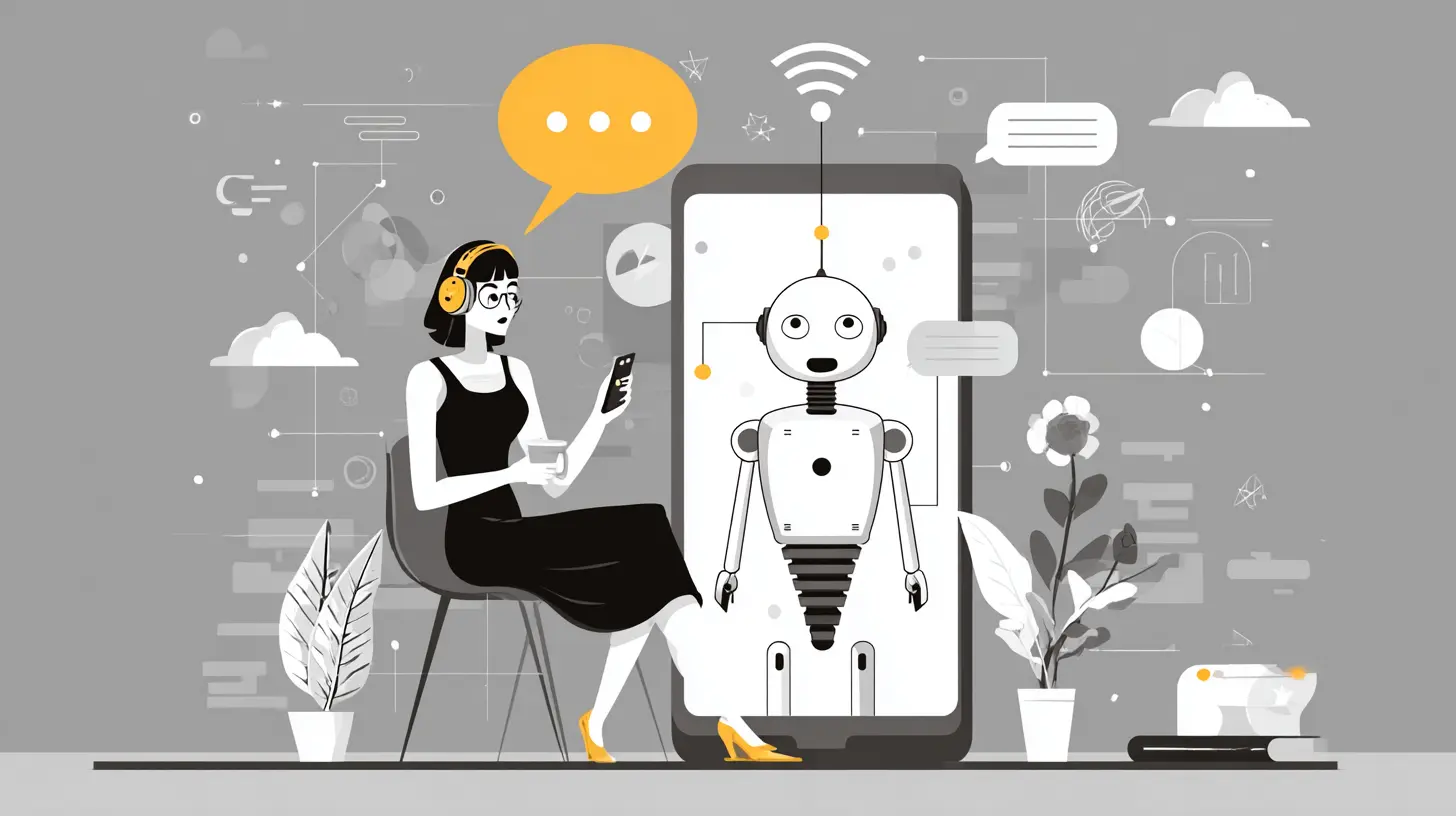
The Rise of Intent Grounding and Action Execution
Understanding language is only half the battle. The other half is acting on it. The old assistants were limited to a set of first-party actions: timers, alarms, calendar entries, and music playback. The new generation is designed to interface with the outside world through APIs, plugins, and function calling.This is where NLP meets the real world. When a user says, "Order my usual from the pizza place," the system must not only understand the words but also map them to a specific set of actions: identify the user from their profile, access the pizza chain's API, retrieve the order history, confirm the address, and place the order. This requires the NLP model to output a structured action plan, not just a text response.
The technical term for this is intent grounding. The model must ground its linguistic understanding in a concrete, executable format. Modern models are trained to emit function calls, which are then validated by a separate execution engine. This separation is critical. You do not want the language model to directly execute code. You want it to propose a call, and then have a sandboxed environment verify the parameters, check for safety, and execute it.
A common mistake is to make the NLP model responsible for the entire pipeline. For example, a model might be asked to calculate the total cost of an order, apply a discount, and then output the final price. This is a recipe for disaster because language models are notoriously bad at arithmetic. The correct approach is to have the model extract the items and quantities, then hand that structured data to a deterministic calculator. The model handles the fuzzy part; the code handles the precise part.
Handling Ambiguity and Asking the Right Questions
Even with massive context windows and grounding, there will be times when the assistant cannot determine the user's intent. The difference between a good assistant and a bad one is how it handles this uncertainty.The old approach was to give up and say, "I'm sorry, I didn't understand that." The new approach is to ask a targeted clarifying question. But not just any question. The question must be generated based on the model's own uncertainty. If the user says, "Book a table for two," the system might be unsure if they mean tonight or tomorrow. A good assistant will ask, "For when?" rather than offering a generic menu of options.
This is a subtle NLP task. The model must generate a question that is both informative and non-repetitive. It must not ask for information that was already provided. It must not ask for information that is irrelevant to the current goal. This is called active learning in dialogue, and it is a hard problem.
The best practice is to use a confidence threshold. The model assigns a probability to its interpretation. If that probability is above, say, 0.9, it acts. If it is between 0.6 and 0.9, it asks a clarifying question. If it is below 0.6, it admits it is lost and asks the user to rephrase. This tiered approach prevents the assistant from being annoyingly hesitant on simple tasks while avoiding dangerous overconfidence on complex ones.
Personalization and User Modeling
The next generation of assistants is not just reactive. It is personalized. It learns from your speech patterns, your common requests, your preferred routes, and your typical scheduling conflicts. This is not a marketing gimmick; it is a deep technical requirement for conversational fluency.Consider the phrase "home." For one user, it means a house in the suburbs. For another, it is an apartment in a city. For a third, it is a moving van. The assistant must build a model of the user's world to interpret even simple instructions like, "Take me home." This model is not static. It is updated continuously based on user feedback, location data, and explicit corrections.
The challenge is balancing personalization with privacy. You do not want to store every utterance forever. The industry is moving toward on-device NLP, where the model runs locally on the phone or the smart speaker. This has two advantages: it reduces latency, and it protects privacy because the raw audio and text never leave the device. However, on-device models are smaller and less capable. The trade-off is between a powerful cloud model that knows everything and a local model that knows only what you explicitly tell it.
A practical approach is hybrid. Use the local model for wake-word detection, simple commands, and privacy-sensitive queries. Use the cloud model for complex reasoning, web-wide knowledge, and tasks that require external data. The system must be smart enough to know when to escalate and when to keep things local. This routing decision is itself an NLP task, often handled by a lightweight classifier.
The Role of Multimodality
Text is not the only input. The new assistants are increasingly multimodal. They can take in voice, text, images, and even video. This expands the NLP challenge significantly. When a user sends a photo of a plant and asks, "What is wrong with it?" the system must combine visual object recognition with linguistic generation to produce a helpful answer.This is not just a concatenation of separate models. It requires a fused representation. The image encoder produces a set of features, the text encoder produces a set of features, and a cross-attention mechanism aligns them. The result is a system that can reason about the relationship between the visual and the linguistic.
A common misconception is that multimodal models are simply more powerful versions of text-only models. In practice, they are harder to train and evaluate. They suffer from a problem called modality gap, where the model learns to rely too heavily on one input and ignores the other. For example, a model might see a picture of a cat and hear the question "What color is the dog?" and answer "gray" because it ignored the text. Mitigating this requires careful data curation and adversarial training.
For most developers, building a full multimodal system from scratch is not feasible. The realistic path is to use pre-trained multimodal models and fine-tune them on specific domains. The key is to understand the failure modes. Multimodal models are excellent at describing what they see, but they are poor at counting objects and reading small text. Do not trust them for precise measurements or OCR-heavy tasks.
Common Mistakes in Building NLP-Powered Assistants
There are several recurring mistakes that teams make when moving from a rule-based assistant to an NLP-driven one. The first is overfitting to the training data. A model that performs brilliantly on the test set may fail miserably in the real world because real users phrase things in ways that were not in the training corpus. The solution is to collect a diverse dataset from actual users, not just from internal testers.The second mistake is ignoring latency. A sophisticated model that takes two seconds to respond is useless for a conversation. Users expect a response in under 300 milliseconds. This forces you to use smaller, distilled models for the first pass and only invoke the large model when necessary. A common architecture is a cascade: a tiny model handles the easy queries, a medium model handles the moderate ones, and the large model is reserved for the hardest cases.
The third mistake is not handling errors gracefully. An NLP model will always be wrong sometimes. The question is what happens next. A bad assistant says, "I don't understand." A good assistant says, "I think you asked about X, but I'm not sure. Did you mean Y or Z?" This recovery mechanism is more important than raw accuracy, because it is what keeps the user engaged.
The fourth mistake is neglecting the feedback loop. The assistant must learn from its mistakes. If a user corrects the assistant, that correction should be logged and used to fine-tune the model. This is not a one-time effort. It is an ongoing process. The best teams have a pipeline that automatically extracts correction events from the logs, clusters them, and generates new training examples.
The Trade-off Between Generative and Discriminative Models
There is an ongoing debate about whether to use a large generative model that produces responses from scratch or a discriminative model that selects from a set of pre-defined responses. The answer is not either/or. It is both, depending on the task.For open-ended tasks like "Tell me a story" or "Explain quantum physics," a generative model is necessary. You cannot enumerate all possible responses. For closed tasks like "Set a timer for 10 minutes," a discriminative approach is safer. The response is deterministic, and you want zero variability.
The mistake is using a generative model for a deterministic task. This introduces unnecessary risk of hallucination. Why ask a language model to generate the exact text "Your timer is set for 10 minutes" when you can just write that string in code? The NLP model should only be used for the parts that require understanding. The parts that require precision should be handled by deterministic code.
This is called a neuro-symbolic approach. The neural network handles the fuzzy input, and the symbolic system handles the exact output. This architecture is more robust than a pure end-to-end model because it separates concerns. A bug in the neural network does not corrupt the output format.
What the Next Five Years Look Like
The current trajectory is toward assistants that are proactive, not just reactive. Instead of waiting for a command, they will observe your behavior and offer assistance before you ask. For example, if you usually leave for work at 8:30, the assistant might check traffic at 8:15 and suggest you leave early if there is an accident. This requires the NLP system to understand routines, infer goals, and generate unsolicited but relevant suggestions.This is a delicate balance. Proactivity can easily become annoyance. The assistant must have a high precision for these interruptions. A single irrelevant suggestion will cause the user to disable the feature. The key is to use a separate model that predicts the value of an interruption, and only trigger it when the predicted value is very high.
Another trend is the move from single-assistant to multi-agent systems. Instead of one monolithic assistant, there will be a network of specialized agents that coordinate. You might have a calendar agent, a travel agent, and a shopping agent. The NLP system acts as a coordinator, parsing the user's request and routing it to the right agent, then combining the results.
This creates new challenges in context sharing. The agents must share a common understanding of the conversation state without stepping on each other's toes. The coordinator must resolve conflicts, such as when the calendar agent and the travel agent both claim responsibility for a request about a flight.
Practical Recommendations for Developers
If you are building a smart assistant today, start with a clear definition of the domain. Do not try to build a general-purpose assistant. Focus on a narrow set of tasks that you can do exceptionally well. A user will forgive an assistant that cannot answer a random trivia question, but they will not forgive an assistant that fails at the core task it was designed for.Collect data from day one. Your initial model will be terrible. The only way to make it better is to have a large dataset of real user interactions. Log everything, anonymize it, and use it for fine-tuning.
Design for failure. Assume that the NLP model will misinterpret the user 10 to 20 percent of the time. Build a clear error path that offers the user a way out. The worst case is a silent failure where the assistant does the wrong thing without asking.
Do not chase the latest model. A smaller, fine-tuned model that is specialized for your task will often outperform a massive general model. The general model is impressive, but it is slow, expensive, and unpredictable. The specialized model is reliable and fast.
Finally, test with real users early and often. You cannot simulate the variety of human language in a lab. Release a beta, gather feedback, and iterate. The assistant that succeeds is not the one with the most advanced architecture. It is the one that users trust to get the job done without frustration.
The next generation of smart assistants is not science fiction. It is being built right now, and the core enabler is not raw compute or bigger datasets. It is the maturity of NLP. We have finally reached the point where machines can handle the messiness of human language well enough to be genuinely useful. The systems that win will be the ones that embrace this complexity, design for it, and never forget that the goal is not to mimic a human, but to be a reliable tool.
all images in this post were generated using AI tools
Category:
Natural Language ProcessingAuthor:

Marcus Gray