How 6G Networks Could Reshape Infrastructure Planning
21 June 2026
Let's be honest for a second. When you hear "6G," your brain probably does a little eye roll. We just got 5G working (sort of), and now they're already talking about the next big thing? I get it. It feels like tech companies are always selling us a future that's just out of reach.
But here's the thing. 5G was mostly about speed. It was about letting you download a movie in seconds instead of minutes. 6G? That's a whole different animal. We're not just talking about faster Netflix. We're talking about a network so intelligent, so pervasive, that it could fundamentally change how we build and think about cities, roads, power grids, and even the pipes under your street.
Infrastructure planning has always been a slow, reactive game. You build a road because traffic is already terrible. You upgrade a power plant because the old one is about to fail. 6G flips that script. It turns infrastructure from a static, concrete-and-steel problem into a living, breathing, self-aware system.
So, how exactly does a radio signal reshape a bridge? Let's dig into the messy, exciting, and slightly terrifying reality of 6G and infrastructure.

The End of "Build It and Hope"
Think about how we plan infrastructure today. It's basically a guessing game backed by spreadsheets. A city planner looks at population growth, traffic studies from two years ago, and some economic forecasts. Then they build a highway or a water treatment plant. They hope it works for the next 30 years.It's like buying a pair of jeans for a toddler and expecting them to fit through high school. It never does.
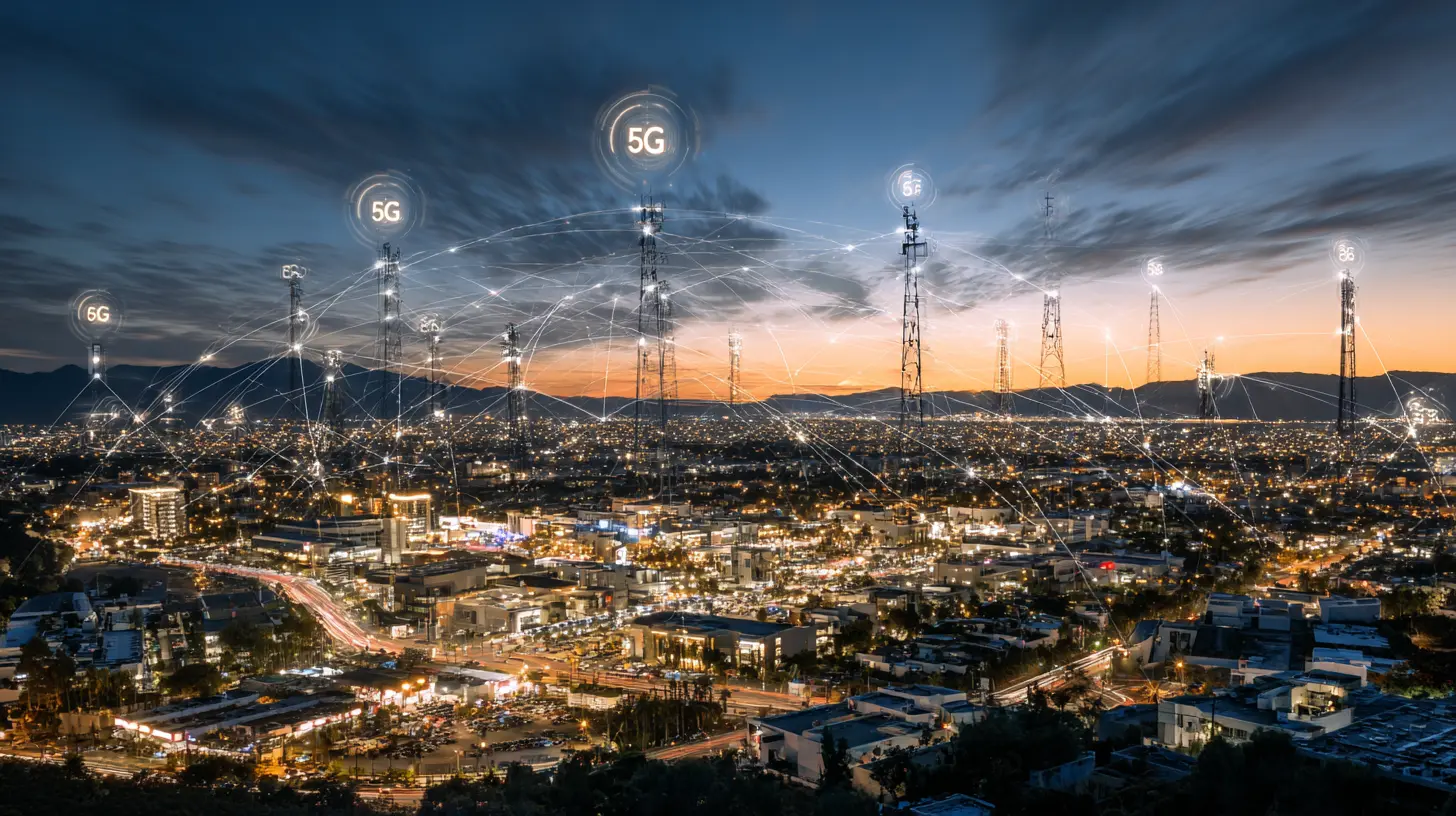
6G changes this because it isn't just a faster 5G. It's designed to integrate sensing, communication, and computing into one unified fabric. This means the network itself becomes a sensor. Every 6G tower, every repeater, every tiny node embedded in a lamppost won't just be moving data. It will be collecting real-time data about the physical world around it.
We're talking about sub-millimeter precision. A 6G network could detect the exact vibration frequency of a bridge as a truck drives over it. It could measure the soil moisture content underneath a stretch of highway. It could track the air pressure inside a water main.
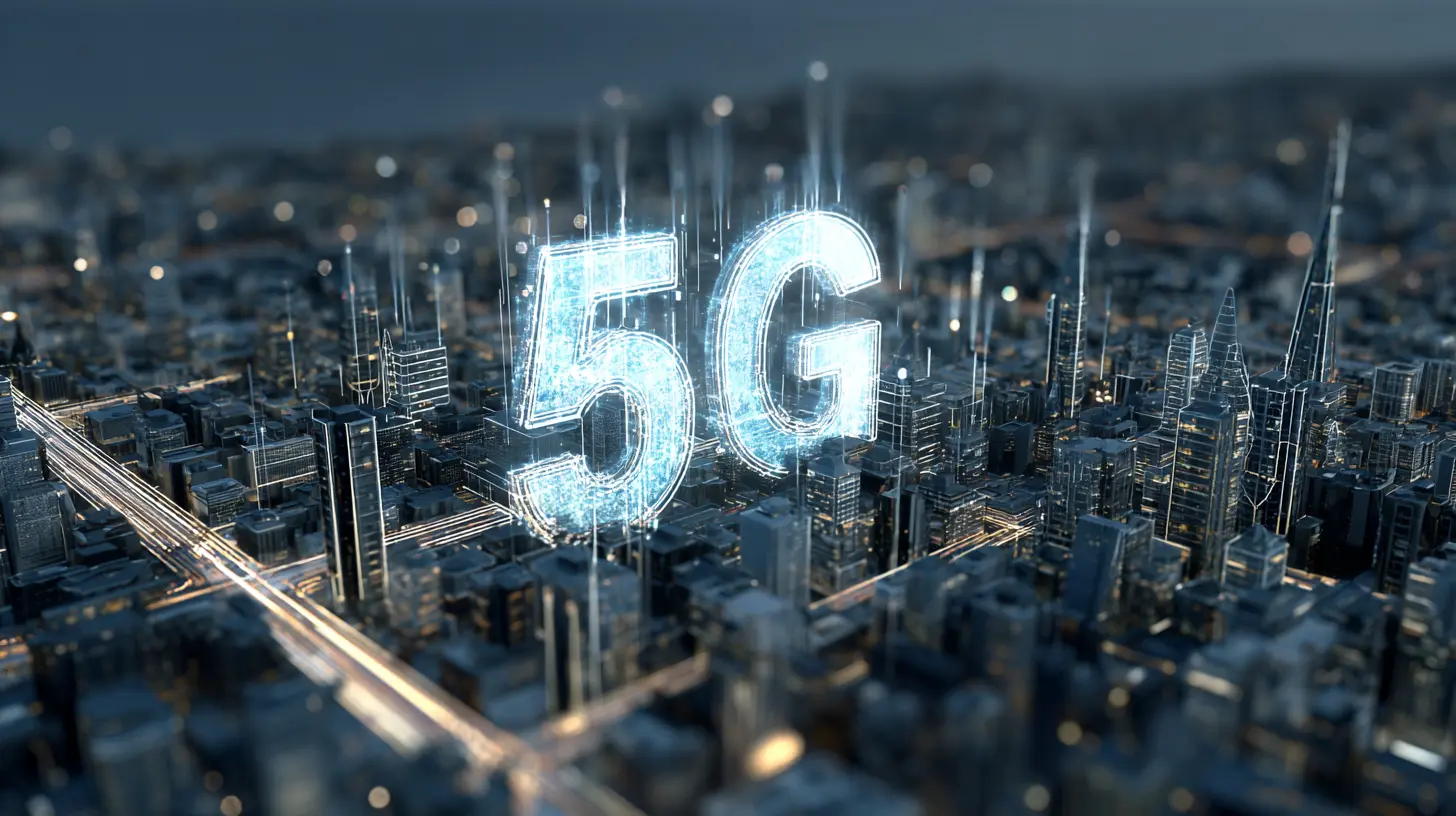
This data flows back to something called a "Digital Twin." Imagine a perfect, 1:1 digital copy of a city that updates itself every millisecond based on what the 6G network is sensing. Now, a planner doesn't have to guess. They can run a simulation in the digital twin. "What happens if we close this road for construction?" The twin shows you the ripple effect instantly. "What if we add a new subway line here?" The twin calculates the cost, the traffic impact, and the energy usage before a single shovel hits the dirt.
Infrastructure planning stops being reactive. It becomes predictive and proactive. You're not fixing cracks; you're preventing them.
The "Smart Grid" Gets a Brain Transplant
We've been talking about the "smart grid" for decades. But the current smart grid is pretty dumb. It mostly tells a utility company that a transformer blew up after it blew up. It's like getting a text from your smoke detector after your house is already on fire.6G brings a concept called "Tactile Internet" to the grid. This means control signals can be sent with virtually zero latency. We're talking about 0.1 millisecond delays. That changes everything for energy infrastructure.
Right now, we struggle to integrate solar and wind power because they're erratic. A cloud passes over a solar farm, and the power output drops instantly. The grid can't react fast enough, so they have to keep dirty gas plants running as a safety net.
With a 6G-powered grid, the network can see the cloud coming (via weather sensors), predict the drop in solar output, and instantly reroute power from a nearby battery storage facility. It happens in the time it takes a neuron to fire in your brain. The grid becomes a single, coordinated organism rather than a bunch of disconnected parts.
For infrastructure planners, this means you no longer have to overbuild. You don't need massive, ugly power plants sitting idle "just in case." You can build micro-grids that are hyper-local. A neighborhood could generate its own power, share it with the block, and sell the excess back to the city, all managed by the 6G network. The physical footprint of our energy infrastructure shrinks, while its intelligence explodes.
Transportation: The End of Traffic Lights?
We have a love-hate relationship with traffic lights. They work, but they are incredibly stupid. A traffic light has a timer. It doesn't know if it's raining. It doesn't know if a school bus is coming. It doesn't know that an ambulance is stuck three blocks away.6G enables "Cooperative Intelligent Transport Systems" (C-ITS). This is where the road talks to the car, and the car talks to the road, and the traffic light talks to both.
Imagine a 6G-enabled intersection. It doesn't need a physical traffic light. It uses a mesh of sensors and vehicle-to-everything (V2X) communication. Cars approaching the intersection "talk" to each other and to the road infrastructure. They negotiate the right of way dynamically. A bus gets priority because it has 40 people on board. An ambulance gets a clear path created automatically. A pedestrian with a 6G phone gets a "green wave" when they step off the curb.
This completely reshapes road planning. You don't need wide, dangerous intersections. You don't need as many lanes. The "infrastructure" becomes the software, not the concrete. Planners can start designing roads that are narrower, safer, and more human-friendly. They can reclaim space from cars and give it to bikes and pedestrians, because the network is managing the flow so efficiently.
The same goes for charging infrastructure for electric vehicles. Right now, we build charging stations and hope people use them. With 6G, the grid can talk to your car battery. It knows your battery level, your route, and the current demand on the grid. It can dynamically route you to a charging station that has cheap, surplus power, preventing the "charging station desert" problem we see today.

Water, Waste, and the Pipes You Never Think About
Let's get dirty for a second. The most boring, yet vital, infrastructure is underground. Water pipes, sewer lines, gas mains. They leak. They break. And we usually find out when a sinkhole swallows a car.6G makes "smart pipes" a reality. We're not talking about putting a battery-powered sensor on a pipe that dies in a year. 6G's low-power capabilities are insane. It can power tiny, passive sensors using "energy harvesting" from ambient radio waves. These sensors can be embedded directly into concrete or plastic pipes during manufacturing. They cost pennies.
These sensors measure pH levels, flow rate, pressure, and chemical composition. They send this data through the 6G network. The city's digital twin instantly knows that a water main in District 4 has a 0.5% drop in pressure. It's not a leak yet. It's a potential weak spot. A maintenance crew gets a notification to check a specific joint, before it bursts.
For a city planner, this is a revolution in capital budgeting. Instead of a "replace everything every 50 years" approach, you move to "replace exactly what needs replacing, exactly when it needs it." You save billions of dollars and prevent the chaos of "digging up Main Street." The network allows you to treat the underground infrastructure as a living organism, not a dead set of pipes.
The "Digital Divide" Becomes a Physical Divide
Here's the critical, uncomfortable part. 6G will be expensive to deploy. It requires a dense network of "small cells" and new fiber backhaul. If we only build this in wealthy urban centers, we create a new kind of inequality.Infrastructure planning has always been about equity. A highway built through a poor neighborhood in the 1950s destroyed communities. Today, a 6G network that only covers downtown skyscrapers will create a "digital ghetto" where the suburbs and rural areas have 4G, while the city core has self-driving cars and predictive sewage systems.
Planners have to actively fight this. They need to treat 6G as essential infrastructure, like roads or water. The planning process must include "digital inclusion" mandates. You can't build a 6G-enabled smart bridge if the neighborhood on the other side doesn't have a 6G signal. The network has to be woven into the fabric of the entire region, not just the profitable parts.
This is where public-private partnerships will either succeed or fail. A city can't just hand a contract to a telecom giant and hope for the best. They need to demand coverage maps that look like a blanket, not a puddle. The physical infrastructure of 6G (the towers, the fiber, the antennas) must be planned with the same democratic rigor as a new park or a school.
The Material Challenge: We Need More Stuff
Let's get technical for a moment. 6G uses higher frequency bands than 5G. These "millimeter wave" and "sub-terahertz" frequencies are fragile. They don't travel far. They can't go through walls easily. They get blocked by rain.This means you need a lot more physical hardware. You need a small cell on every street corner. You need them on the inside of buildings. You need them on buses and trains.
This radically changes how we design buildings and roads. A new skyscraper isn't just steel and glass anymore. It's a giant antenna. The facade needs to be designed to reflect or transmit 6G signals. The concrete needs to have integrated waveguides. The road surface needs to be embedded with repeater coils.
Infrastructure planners are now material scientists. They have to think about radio frequency (RF) transparency. They have to ask: "Does this new pedestrian bridge block the signal to the hospital?" They have to design "smart lampposts" that are actually mini data centers, powering the lights, charging EVs, and running the edge computing for the 6G network.
This is a massive shift. It means the "planning" phase now involves RF engineers sitting next to civil engineers. It blurs the line between the digital and the physical completely.
The Privacy Nightmare We Can't Ignore
I can't write this article without talking about the elephant in the room. A network that senses everything is a surveillance network. If the 6G grid can detect a leak in a pipe, it can also detect a person walking in their house. If it can track a car's vibration, it can track your movements.Infrastructure planning for 6G isn't just about laying cable. It's about building in privacy and security from the ground up. This is called "Privacy by Design."
Planners have to decide: Who owns the data from the water pipe? The city? The water company? The network provider? And what about the data from the traffic intersection? Can a private company buy that data to sell you ads?
These are planning decisions. They determine the physical architecture of the network. Do we build a "federated" network where data is processed locally and never leaves the sensor? Do we build a centralized "brain" that sees everything? The choice we make will determine whether 6G creates a utopia of efficient cities or a dystopia of constant surveillance.
A good infrastructure plan for 6G will include "data trust" zones, where the data is anonymized and governed by a public board, not a corporate algorithm. It will include "air gaps" for critical infrastructure like hospitals and military bases. The planning process must be transparent. If you can't explain to a citizen why a sensor is on their street corner, you probably shouldn't put it there.
Wrapping It Up: From Static Maps to Living Systems
So, how will 6G reshape infrastructure planning? It will kill the static master plan. The old idea of a 20-year infrastructure blueprint drawn on a piece of paper is dead.Instead, planning becomes a continuous, iterative process. You build a small piece of infrastructure, the 6G network measures its performance, the digital twin runs a simulation, and you adjust the next piece. It's agile development for the physical world.
We will stop building "things" and start building "systems." A bridge won't just be a bridge. It will be a sensing node, a communication hub, and a data generator. A street won't just be a path for cars. It will be a power transmitter, a data highway, and a safety monitor.
This is hard. It requires planners to learn new skills. It requires governments to move faster. It requires companies to be less greedy with data. But the potential is enormous. We can build cities that are truly responsive, efficient, and human-centered.
The question isn't whether 6G is coming. It is. The question is whether we have the guts to plan for it properly, or if we'll just bolt it onto our broken infrastructure and call it a day.
all images in this post were generated using AI tools
Category:
Network InfrastructureAuthor:

Marcus Gray
Discussion
rate this article
1 comments
Fallon McTigue
Exciting times ahead! I can't wait to see how 6G transforms our cities and daily lives...
July 1, 2026 at 3:17 AM
Marcus Gray
Absolutely! The potential for 6G to enhance urban planning and daily experiences is thrilling. I'm eager to see the innovations it brings.